In 1945, the LaRue family leaves California and moves to the bucolic world of Northeastern Oregon.
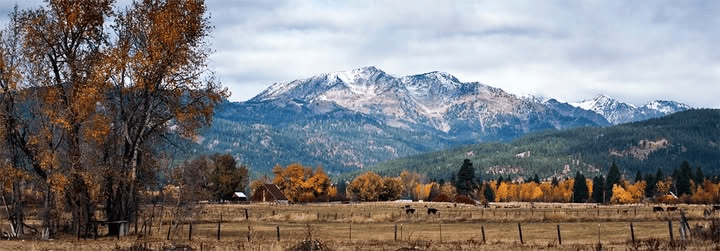
The Wallowa Mountains dominate the landscape of Oregon’s northeast corner. The Nez Perce Indians called this country The Land of Winding Waters. With the arrival of European settlers, these craggy mountains and picturesque valleys came to be known as the American Alps. To the east of the mountains, the Snake River slices through North America’s deepest river gorge, Hells Canyon. Nestled in one of the valleys above the canyon’s rim, the little town of Halfway is our destination.
Before Halfway, however, we make a stop at Nampa, Idaho. An old friend and fellow worker from McMullan’s Dairy had established a farming operation there. Dad wants to visit with his friend and check out the area.
Our host saddles a horse for me to ride. It is my first experience riding a real working saddle horse, and I am hooked. I spend every waking hours riding around the ranch until we leave.
The road leading from Nampa to Halfway follows along the old Oregon Trail to Baker, Oregon. Pioneers in covered wagons followed the same route starting in the 1840s. The route runs along the Snake River to a place called Farewell Bend. At Farewell Bend, the Snake turns north into Hells Canyon. The Oregon Trail, now called Highway 30, forks off northwest through the Burnt River canyon up to Baker Valley. We, pioneers of the 1940s, follow this historic route in our 1937 pickup truck.
From Baker, we turn east for the next sixty miles to our destination, Pine Valley. We cross the still visible wheel ruts of the Oregon Trail running through a dry sage-covered plain of Virtue Flat. The dry landscape gives way to a stretch of lush green irrigated pastures and farmed fields. The paved road turns into gravel. Passengers in occasional oncoming vehicles wave a friendly greeting as we pass. We seem to travel through time to an earlier era. Cowboys and ranchers still tend their cattle on horseback. Stout draft horses still draw farm implements. The twentieth century has largely eluded the countryside.
The road unexpectedly changes back to pavement. The landscape changes to a narrow canyon. We follow the Powder River through deep cuts and winding turns to Eagle Valley. Eagle Valley reveals another landscape of green pastures and farmed fields. We pass through the small cluster of homes and businesses called Richland. The valley closes back to a narrow canyon as we approach the Powder’s confluence with the Snake.
A lettered road sign points left toward Halfway. We follow the sign and climb a steep grade with sharp switchbacks. Our loaded pickup grinds along in low gear. We top the hill and travel down through a wide swale. Cattle graze on the dry yellow grass below farmsteads set back against the hills. The yellow landscape turns to green, and Pine Valley opens before us.
We turn left at an intersection near a sawmill and follow the valley’s only paved road to Halfway. Halfway boasts a bank, two grocery stores, two bars, several churches, three gas stations, a drug and liquor store, and other related businesses. The Gray Gables Hotel houses one of the bars and offers rooms to rent. Three housekeeping cabins behind a white picket fence and a manicured green lawn flank one side of the hotel. We rented one of the cabins and set up housekeeping. It is a welcome relief to get off the road and out of the cramped pickup cab.
My eight-year-old mind does not grasp the significance of our travels. At eight, you do not question your parents’ actions. You accept whatever they do as the norm. Even so, I could sense that this small world was a complete change from the world I had experienced in California. My dad’s motivation will always remain a mystery. Perhaps he was a throwback to his grandparents’ generation. Perhaps he was a precursor to the counterculture of the 1960s. Maybe he just wanted to escape the controls that a wartime culture had placed on society. The cold, hard facts were that we had arrived in the strangely named little town of Halfway, Oregon, and there I would remain for the next ten years until I graduated from high school. My Post-War Home Front had just begun.
Monument to Confederate dead, Arlington National Cemetery, Arlington, Va. (Universal History Archive/Universal Images Group via Getty Images)
Here’s a little note I penned in 2023.
In George Orwell’s dystopian novel, “Nineteen Eighty-Four,” the main character, Winston Smith, is a member of the Outer Party who works at the Ministry of Truth, where he rewrites historical records to match the state’s ever-changing version of history. Winston revises past editions of The Times, while the original documents are destroyed when they are dropped into ducts called memory holes that lead to an immense furnace. He secretly opposes the Party’s rule and dreams of rebellion, even though he knows he is already a “thought criminal” and will likely be caught one day.
In today’s real world, Defense Secretary Lloyd Austin on Thursday signed off on an independent commission’s recommendations to rename military bases that honor Confederate officers and scrub a long list of references commemorating the southern rebellion.
The Naming Commission, established by Congress last year, inventoried all the military’s current references to the Confederacy. It found nine Army bases and several buildings commemorating rebel officers, as well as a monument honoring Confederate soldiers at Arlington National Cemetery.
“The names of these installations and facilities should inspire all those who call them home, fully reflect the history and the values of the United States and commemorate the best of the republic that we are all sworn to protect,” Austin, the first Black defense secretary, said in a statement in which he said he agreed with the commission’s recommendations.
The following nine bases are scheduled to be renamed:
Fort Benning, Georgia — Fort Moore
Fort Bragg, North Carolina — Fort Liberty
Fort Gordon, Georgia — Fort Eisenhower
Fort A.P. Hill, Virginia — Fort Walker
Fort Hood, Texas — Fort Cavazos
Fort Lee, Virginia — Fort Gregg-Adams after two Black service members, Lt. Gen. Arthur Gregg, a supply logistician who helped desegregate the Army, and Lt. Col. Charity Adams, who oversaw mail distribution in Europe during World War II
Fort Pickett, Virginia — Fort Barfoot
Fort Polk, Louisiana — Fort Johnson after Sgt. William Henry Johnson, a Black soldier in World War I who was awarded the Medal of Honor in 2015
Fort Rucker, Alabama — Fort Novosel after Chief Warrant Officer 4 Michael J. Novosel Sr., an Army aviator during the Vietnam War who flew 2,543 extraction missions and rescued more than 5,500 wounded soldiers
“Every record has been destroyed or falsified, every book rewritten, every picture has been repainted, every statue and street building has been renamed, every date has been altered. And the process is continuing day by day and minute by minute. History has stopped. Nothing exists except an endless present in which the Party is always right.” (Orwell, George. 1984. New York: Signet Classic, 1950.)
(Author’s note: The Monument to the Confederate Dead was taken down and stored by the Defense Department in 2023. In 2025, the Pentagon announced it will refurbish the memorial and return it to Arlington in 2027, near the burial site of its sculptor, Moses Ezekiel.)
Like a wagon train of The Old West, we get in line with a collection of about thirty other vehicles—everything from cars with tents tied on top, to 40-foot motor homes, to our 23-foot travel trailer. Our Wagon Master (tour guide) waves us forward—our destination, San Felipe, Baja California Norte, Mexico, on the Sea of Cortez.
It is January 1983. Wife Margaret and I are in year three of a life-on-wheels adventure. In our mid-forties, we have explored much of the western United States and Canada. It is time to take on Mexico.
Snowbirds gather along the southern U.S. border each winter. The brave venture into border towns to pick up cheap meds and liquor, and to get their teeth worked on. Most go no further. But brave and timid alike, they revel in retelling horror stories about travel in Mexico. With each telling, the stories become more terrifying. We listen to the stories. To play it safe, we joined this Yuma, Arizona, and San Felipe Chambers of Commerce-sponsored caravan.
At the Mexicali Port of Entry, guards check our IDs and wave us through. Life in the third world begins. Familiar rules of the road no longer apply. Traffic signs, printed in Spanish, are small and almost hidden. No one seems to obey them anyway. We follow the rig ahead of us, blindly.
An escort of motorcycle cops joins in. With red lights flashing and sirens blaring, they herd us along. Confusion reigns. Horns honk as cars, trucks, and buses crowd in and out of our line of vehicles. With one foot on the gas pedal and the other on the brake, I strive to keep up without crashing. We finally reach the outskirts south of the city. Traffic eases, and the scene turns rural. My white knuckles on the steering wheel take on a renewed lifelike color.
The Mexican part of the Imperial Valley is not unlike the farming areas around El Centro and Brawley on the U.S. side. Crops grow even in winter, and men wearing straw hats and women wearing bandanas work the fields.
The valley ends, and the landscape turns to desert. No shoulders border the narrow pavement. The road follows the hilly terrain with little cut and fill. Patches of broken asphalt and detours around boulders blocking deep potholes slow our progress. After about 100 miles, we spot the upper reaches of the Sea of Cortez. We are nearing our destination.
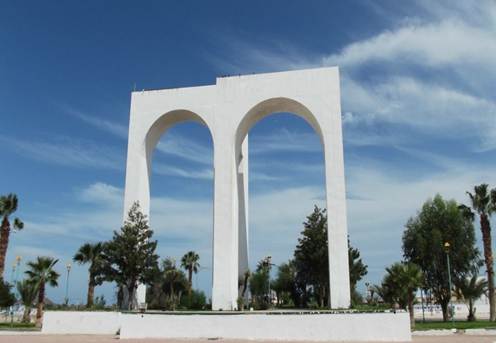
The Gateway to the Sea of Cortez, a sixty-foot-high pair of white arches, welcomes us to San Felipe. Our guides lead us to a modern trailer park called Ruben’s Camp. It fronts the beach, and palm trees wave in the breeze. We settle in for a week of exploration.
San Felipe is a quiet fishing village in the throes of transition to a tourist destination. The streets are still mostly dirt. The town is built along the arc of a picturesque beach lining an open bay. A large square breakwater provides shelter for the fishing fleet.
Most of the folks in our caravan are typical tourists, worried about drinking the water and complaining about the culture. They complain that businesses close in the afternoon for siesta and that the people do not speak English. The fictional Ugly American plays out in little San Felipe, a mere 122 miles from the border.
I quickly learn that the expatriates who spend winters at Ruben’s Camp gather in the combination office/clubhouse for café (coffee) and pan dulce (doughnuts and sweet rolls) each morning. I joined them and began my Mexican travel education. There are many details to digest, but the main points are to not drive after dark, use main highways, stay in recognized campgrounds, and that the horror stories I have heard are way overblown. When the week comes to an end, and our fellow tourists line up for the trip north, we bid them farewell and stay put. We relax and start to enjoy the Latin American way of life.
Spectacular sunrises greet us each morning. Birds fill the skies and dive for their breakfasts. Pangas race across the bay on their way to deep-water fishing. Our days are filled with exploring the town and the surrounding area. A surprising number of American expatriates, some in rented houses and some camped out in the desert, seem safely assimilated into the culture.
We befriend fellow greenhorns. Lee and Lennie, in their thirties from McCall, Idaho, are bent on sailing a 22-foot sloop to La Paz. A storm producing 10-foot swells blows through on their first day out. They retreat, and we spend good times clamming and picnicking on the beach with them. They finally get underway, and according to mutual acquaintances we meet later in McCall, make it to La Paz safely.
Al and Carol (Carol is the sister of actress Madelyn Rhue) camp next to us. Al and I charter a panga and spend a good day fishing. We buy clams and mussels from a local vendor called the Clam Man, whose mantra is, “My clams make you horny, guaranteed!” We enjoy a good clam feed. But the jury is still out on the Clam Man’s slogan.
Three weeks pass, and we are ready to take on Mexico—alone this time. We return to Yuma to collect the mail, pay the bills, and do a little shopping. The trip through Mexicali goes much smoother without the motorcycle cops helping us. A week later, we set out on our next south-of-the-border adventure with a newfound sense of confidence.
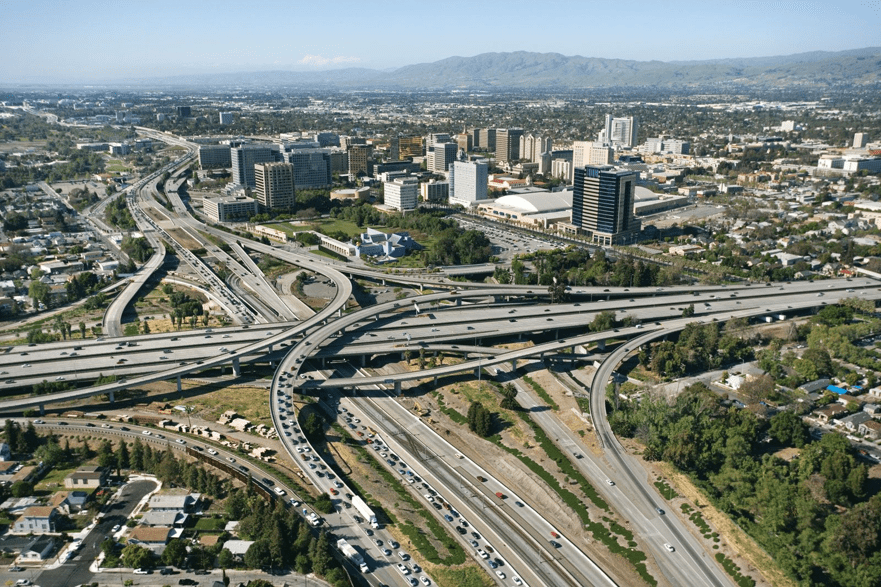
A Half Century of Progress? (Note the same mountains in the background)
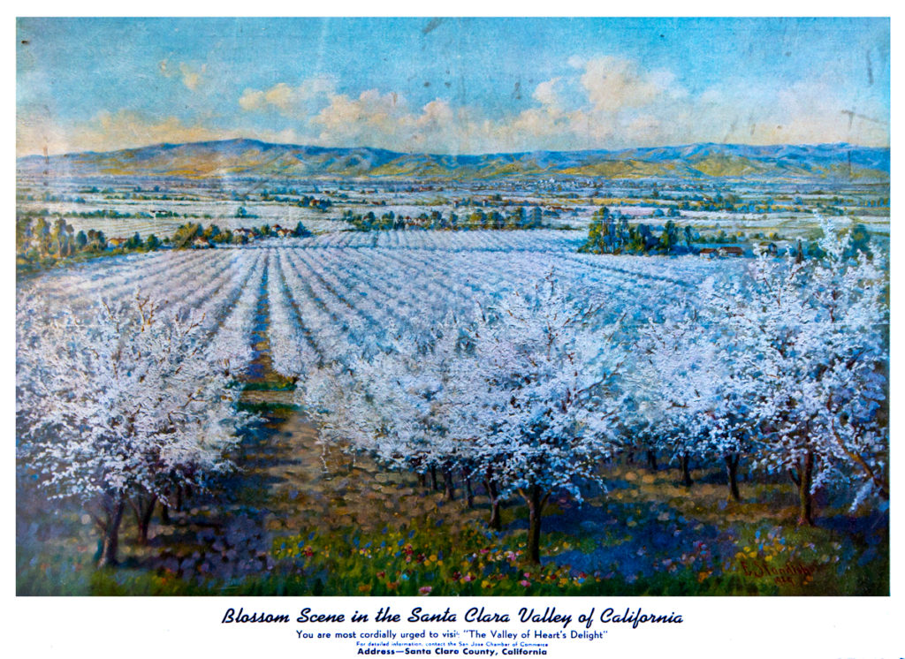
When the ancients wrote of the Garden of Eden, they may well have used California’s Santa Clara Valley as their model. “And out of the ground made the Lord God to grow every tree that is pleasant to the sight, and good for food ….” Genesis 2:9. Or so it seemed until an enigma called Silicon Valley took root.
The valley, named after the Spanish Mission Santa Clara, was long known as the Valley of Heart’s Delight for its high concentration of orchards, flowering trees, and plants. Until the 1960s, the Santa Clara Valley, with 39 canneries, was one of the largest fruit-producing and packing regions in the world. That all ended as a new class of urban developers descended like locusts to root the trees and trample the land like a herd of Monterey Wild Boar in a cabbage patch.
Bulldozers uprooted orchards and vineyards. Cookie-cutter housing tracts popped up in their wake. Strip malls, shopping centers, factories, and office buildings sprang up where quaint homesteads and villages once stood. Ever-widening streets and new freeways couldn’t keep up with the demands of ballooning traffic.
Fresh out of the Navy, I hit the Bay Area in 1960, driving a 1958 Chevy Bel Air with payments due and about $200 in my pocket. Nine years later, I had a wife, two kids, a house in the suburbs with a 30-year mortgage, a 1969 Ford Country Squire station wagon with fake wood trim, and a 1963 Austin Healey 3000 sports car. I worked as a scientific computer programmer in the Information Sciences Department of Fairchild Semiconductor International, Inc.—the seat of the new silicon technology. Some would say that I had made it. I was not so sure.
Sitting in my Austin Healey with the top down, awaiting a turn to get on the new 280 freeway, I watched the river of traffic flow by. The smell of horse manure caught my attention as a pickup truck towing a horse trailer rattled down the highway. I was transported back to my youth, growing up on a ranch in Eastern Oregon. The old saying—you can take the boy out of the country, but you can’t take the country out of the boy—invaded my mind as I joined the throng of indistinguishable commuters on their way to work.
What should I do? Conventional wisdom told me “Stay where you are.” My gut told me “It’s time to move on.”
I compiled a list of every small-town business and institution in the area west of the Rockies I could locate that used a computer. I mailed an unsolicited job resume to each of them. That effort did not involve a lot of resumes at that time in history, but it did result in a job offer from Boise Cascade Corporation in Boise, Idaho.
In the autumn of 1969, amidst much wailing and gnashing of teeth by my in-laws over the tearing away of their only daughter and two grandsons, we watched as the moving van pulled away from our driveway on its way to Idaho. My wife, two sons, and I followed shortly thereafter—on our way to new beginnings. Our lives would be forever changed. My sports car would soon be transformed into a pickup truck. Hard work and clean air would be our future. Silicon Valley would be our past.
The Back to the Land movement of the seventies was just beginning. I don’t know if I was a part of that movement, or if I was simply returning to my roots. But I guess I lived it. How could a country boy know for sure?
Unmerciful sun beat down on the mountainside. A helicopter plucked a sunstroke victim off a shale ledge and flew away. We kept a slow, steady pace. None of us wanted to be the guy on the helicopter.
The Korean War was history. Few Americans had even heard of Vietnam. Peace ruled the land in the late 1950s. But readiness was still the mission of the U.S. Navy.
As a newly minted Naval Aviator with shiny new gold bars on my collar and shiny new gold wings on my chest, I was still getting used to being called “Sir” when new orders read: “Report to Survival School.”
About 30 Navy personnel assembled in a building on North Island Naval Air Station for a short series of lectures on survival and prisoner of war conduct. When the lectures ended, we marched down to the beach.
Guards dressed in uniforms right out of a Hollywood war movie set handed us C-rations and disappeared.
Our senior officer, a Navy Commander, took charge. He divided us into two companies with two squads. With the rank of Ensign, I was assigned to lead one squad of six enlisted men.
As evening approached, we all gathered driftwood and started a bonfire.
An abandoned barrel, half-filled with water from the only tap on the beach, became our cooking vessel. We each donated one can from our C-rations for a hobo stew.
Some citizens were digging for clams and diving for abalone nearby. Trading with the natives seemed within the rules of war. We struck a deal for their catch.
Supposedly stripped of personal property except the clothes on our backs, how a bunch of penniless sailors pooled enough money to cumshaw those illicit crustaceans can only be described as the Navy Way. We threw the catch in the pot. The stew turned out surprisingly well.
Ocean survival drills filled our days. Wrapped up in parachute panels as makeshift sleeping bags, we tried to sleep at night. For the final drill, our captors herded us onto a boat and dumped us overboard in the open sea with nothing but a Mae West for flotation.
After what seemed an eternity, a helicopter hovered over me. It released a sling dangling from a cable. I slid my arms through the sling. They hoisted me aboard. Wet and shivering, I joined my fellow survivalists. The helicopter crew delivered us back to the beach to await our next adventure.
It came in the form of a bus ride over narrow, winding roads to Warner Springs Survival School.
The camp could have passed for the set of the movie, The Bridge on the River Kwai. Guards escorted us from the bus into the chain-link fenced compound and sat us down on long benches. They lectured us on desert survival and laid out the schedule for the next two days.
A mountain hovered over the camp. We were to hike up that mountain to a campsite where C-rations and water would be issued and spend the night there. The next day, we would hike back down that mountain. Marines from Camp Pendleton would try to capture us on the way down. If we reached a flagpole outside the compound without capture, our survival training would be over. If captured, the Marines would return us to the compound for a round of interrogation.
The hike began on a well-worn trail in cool early morning air. As the day wore on, the terrain became steeper and the trail less defined. The temperature soared, and the small canteen of water we carried soon went dry.
My squad of late teens and early twenty-year-olds had by now become a tight little group. We saw little of our company commander. He was a Navy Lieutenant, a seaplane pilot. He hung out with the senior officers most of the time.
At a shale-covered rise near the bottom of a canyon, we stopped for a break. Just ahead, a patch of sand with a few green bushes contrasted sharply with the desert browns and reds around it. We made for the shade of the bushes and sprawled on the ground.
As a country boy not long off the farm, I knew that where there’s green, there’s water. I dug in the sand with my hands and, about a foot down, found moisture. My companions joined in, and we soon had a basin dug with water rising from the bottom. We waited anxiously for the sediment to settle.
The voice of our seldom-seen company commander suddenly demanded. “What are you doing here?”
“Oh, just practicing survival,” I answered dryly.
“What’s that?” he asked, pointing at our spring.
“Looks like water,” I answered.
“What are you going to do with it?” he asked.
“Drink it. Care to join us?” I responded.
“You can’t drink that. Cows might have peed in it.” With that, the Lieutenant sat down, pulled off his boots, and stuck his feet in our pool. “Aah, that feels good,” he said.
I held my tongue, got my squad up, and moved out, leaving the Lieutenant sitting there with his feet in our water.
He soon overtook us and started barking orders, telling us to form up. He must have decided that our little group needed to rejoin the military. We just tightened ranks and hiked on up the hill.
Eventually, the heat and lack of water took their toll on the old seaplane pilot. Out of shape and exhausted, he sat down on a rock, looked up at me, and said, “I can’t go on any farther.”
At that point, rank and privilege ceased to exist. I got him back on his feet and moving. My young, in-shape companions gladly hiked on ahead. My charge became the Lieutenant.
I picked up a stick and prodded him up the hill. We eventually made it to the campsite. He drank some water, seemed to recover from his delirium, and rejoined the senior officers. The breakdown of discipline on the trail was never discussed.
The campsite had trees, and it was cooler. The guards issued C-rations. We ate hungrily. Tents made of parachutes hung from the trees. There was no singing around the campfire that night. Exhausted, we crawled into the tents and slept.
Reveille came early. A quick muster, and we were on our own. I took the evasion part of Survival, Evasion, Resistance, and Escape (SERE) seriously. I wanted none of the resistance part. We started down the hill. It was every man for himself.
I could see the line of Marines working their way up the mountain and the compound with its flag off in the distance. Some of the evaders took off running down the hill, hurrying to reach the flag. Soon, the pop-pop of M1 blank cartridges filled the air as the Marines captured them.
I decided to take “a path less traveled” and drifted away from the crowd. A barbed wire fence soon blocked my progress. A sign on a fencepost announced, “California Department of Corrections. Keep Out.”
It was decision time. I suspected that what awaited me if captured would not be pleasant. The question was, what would happen if the prison authorities caught me trespassing on their property?
What could they do? They certainly wouldn’t put me through the torture of the interrogation the SERE guards had in mind. What the heck, all’s fair in love and war. I crawled through the barbed wire and pressed on. If caught, I’d just play dumb and say I didn’t see the sign.
I took what cover I could find. Once, I thought a Marine spotted me, but he was busy taking another prisoner and either did not see me or chose to ignore me. Some guys in dungarees with DOC painted on the back of their shirts were sitting in the shade near a barracks. They waved. I waved back.
With the flagpole within sprinting distance, I hunkered down behind a clump of bushes and watched. A couple of Marines delivered a prisoner to the guard at the flagpole. They headed back to the action, and the guard escorted the prisoner to the compound. That was my opportunity. I grabbed a post and vaulted over the minimum security fence, sprinted to the flagpole, wrapped my arms around it, and hung on. The guard came back, spotted me with a surprised look on his face, and pointed me to a door outside the compound.
In a darkened room, my fellow escapees and I observed the compound yard through a one-way mirror. A guard led a captive on his hands and knees around with a leash like a dog. Other guards crammed a captive into a sweat box and slammed the lid down. They pulled a dazed captive from another sweat box, slammed him into a chair, and tied him tight with ropes. A scratchy speaker in the room provided sound from the drama in the yard. An interrogator across the table from the bound man directed him to sign a confession for committing war crimes. This seemed like a joke at first, but as the scene unfolded, it took on an air of reality. The interrogator called the man the son of a whore dog, insulted him and his wife and mother repeatedly, and bore down with insults and accusations until the poor fellow was reduced to tears. He finally signed the confession. These scenes continued until late afternoon.
The nightmare ended with a bus ride back to North Island and a new appreciation life as we live it. Along the way, the bus stopped at a roadside burger joint. The Navy treated us to the best darn hamburger I have ever eaten, bar none.
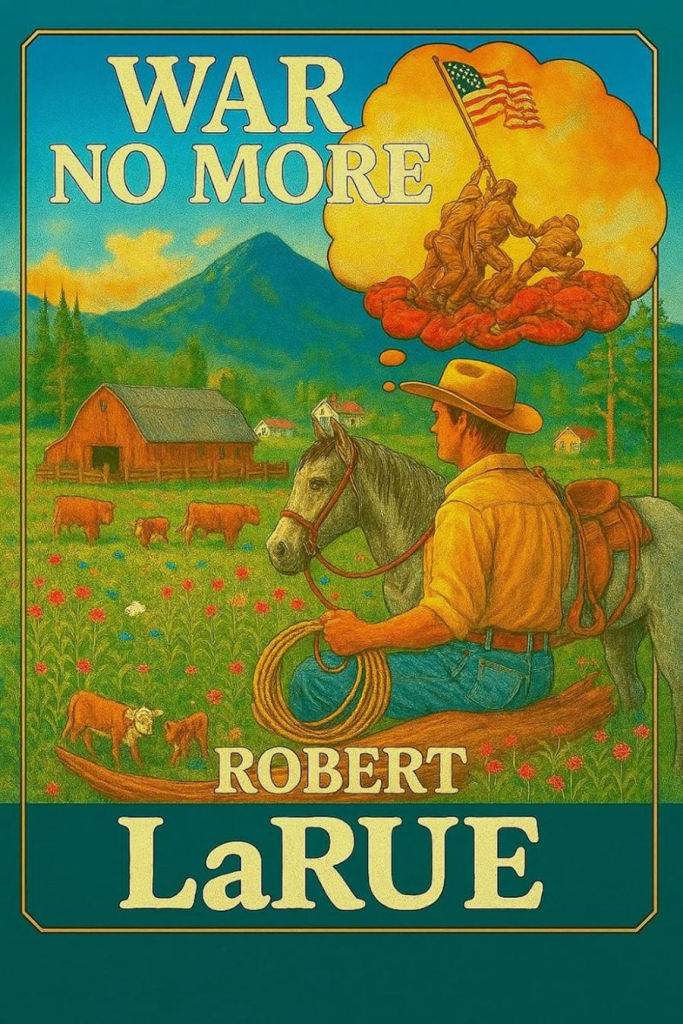
A lot of the social interaction in the novel War No More takes place in and around the Hotel Pend Oreille. The model for the hotel is the historic Hotel Charbonneau, now a National Historic Place.
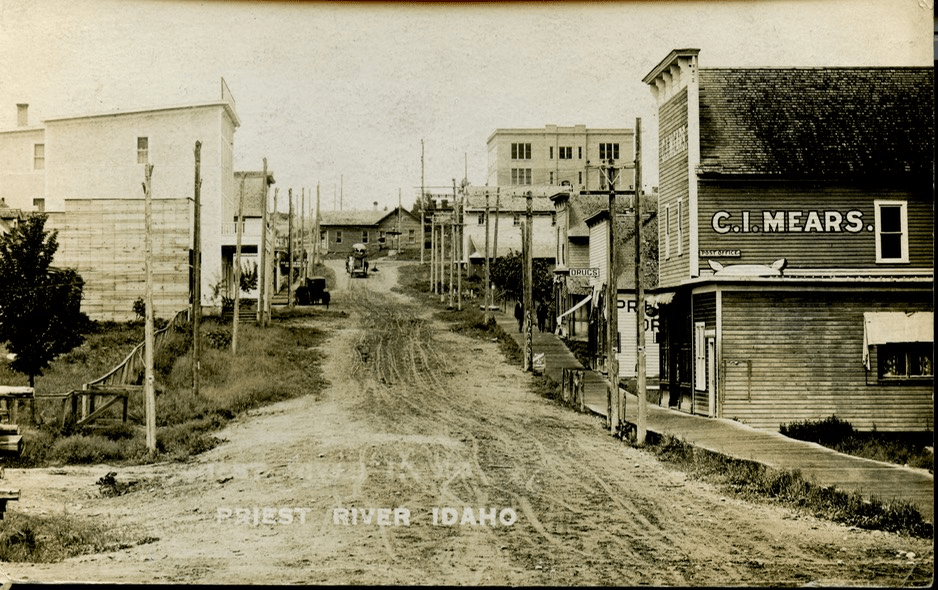
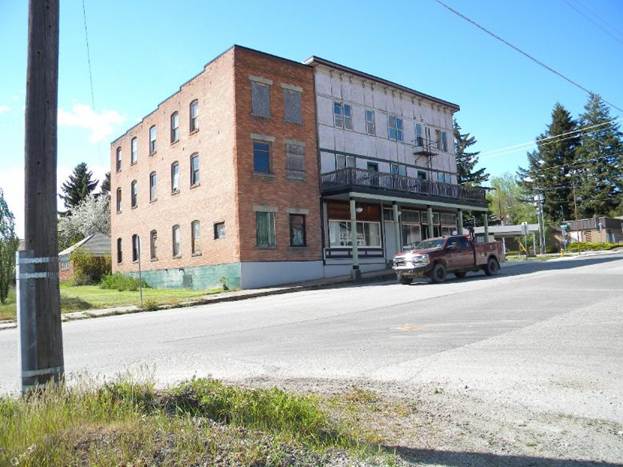
The Hotel Charbonneau was originally constructed in 1912 by Charles and Dora Charbonneau (architects PJ Young and Charles Charbonneau). During the first half of the 20th century, Priest River and the Hotel Charbonneau, which is located one block away from where the train station used to be, was a popular stopping-off point for people traveling to nearby Spokane, Coeur d’Alene, Sandpoint, and Priest Lake. In 1920, Dora Charbonneau added a brick addition onto the south side of the hotel to accommodate more guests. After the brick addition was built, the Hotel Charbonneau boasted 27 guest rooms with more than half of them having their own private bathrooms; an extravagant luxury at that time.
The Charbonneau operated as a hotel/boarding house until the late 1980s, when it was abandoned and risked being condemned. In 1991, the Priest River Restoration and Revitalization Committee (PRRRC), a local non-profit group composed entirely of volunteers, took control of the Hotel Charbonneau and saved it from complete deterioration. Among the PRRRC’s accomplishments was having the Hotel Charbonneau added to the National Register of Historic Places (11/19/1991), which protects the historic structure for future generations.
You can see the Hotel Charbonneau in the 1914 photo above on the left. The photo was taken before the brick addition was built. https://hotelcharbonneau.com/history.html
The following pictorial shows the hotel and surroundings as they exist today. War No More is available on Amazon https://www.amazon.com/War-No-More-Robert-LaRue-ebook/dp/B0GC9MKK7N free on Kindle Unlimited or $3.99 to buy, $14.99 for the paperback. Check it out. (Photos by the author.)
Hotel Charbonneau (Fictional Hotel Pend Oreille in War No More) as it appears today.
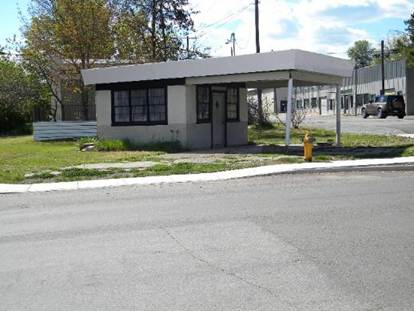
Abandoned filling station (Seaton’s Garage in the novel).
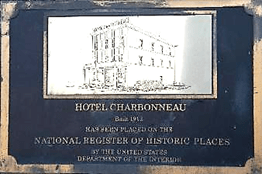
National Register of Historic Places placard at the entrance of the hotel.
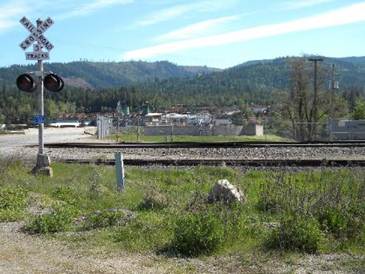
The railroad tracks still run by, but the depot is long gone.
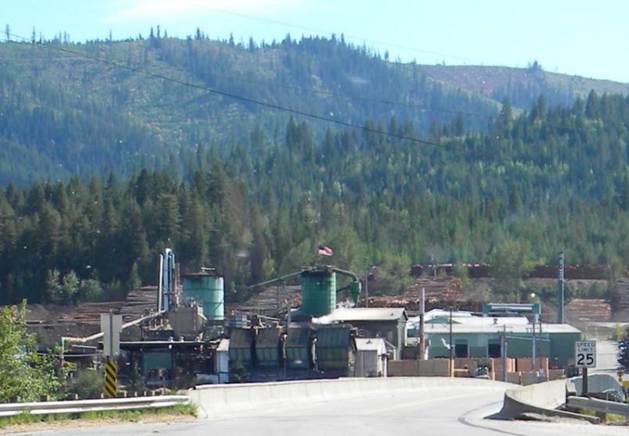
But they still saw logs at the mill across the river.
I’ll always remember the summer of ’52, the year we built the dam at Fish Lake. It changed my life forever.
I grew up on a ranch in a small valley at the southern foot of Eastern Oregon’s Wallowa Mountains. We raised cattle and farmed the land to feed them. Except for school, my world was that ranch until the summer of ’52—the year I turned fifteen.
I knew some of the history of my world. The Nez Perce Indians made their home among the peaks and valleys of the Wallowa Mountains until the Nez Perce War of 1877. The Indians put up a ferocious fight, but the U.S. Army ultimately won. Chief Joseph famously declared, “From where the sun now stands, I will fight no more forever,” and the tribe was shipped off to Oklahoma.
The Nez Perce called their home the Land of Winding Waters. After their removal, Oregon Trail pioneers rushed in and began farming the land. Their crops needed water, so they built dams and ditches to capture every drop they could find in the streams and lakes of the Land of Winding Waters.
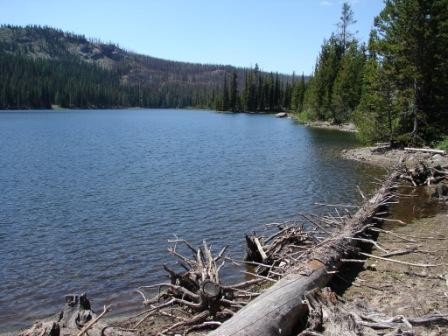
They named one of the high-country lakes Fish Lake. In the 1880s, they erected an 800-foot-long earthen dam along with a spillway and headgate made of logs and planks across the lake’s natural outlet. Fish Lake was still supplying irrigation water for our neighbors and us in 1952.
Through the years, this structure was known to fail, flood the canyons below, and leave the irrigated fields dry. An often-repeated story tells of a band of 2,000 sheep drowned during one such dam burst. Fear of another failure, followed by a year without water, loomed over us.
From the time I was about ten, I shouldered a shovel each spring and joined my dad and the other ranchers when we cleaned and repaired the maze of ditches, creeks, and dams that carried the water to our fields. Crawling around on moss-slick logs repairing Fish Lake Dam presented a persistent, dangerous challenge. After one such repair, the assembled ranchers decided they needed a new dam.
U.S Soil Conservation Service engineers designed the new dam and assigned a project engineer. Labor was to be provided by the landowners. My dad volunteered me as our laborer. I jumped at the chance. Any excuse to get off the ranch and try something new was good by me. Armed with some food, a bedroll, a pup tent, and a fishing pole, I became a member of the Fish Lake Dam construction crew.
I joined a small tent camp where the crew stayed. The crew consisted of the SCS project engineer, an equipment owner/operator, his wife, who served as camp cook, their two preteen kids, and two other landowner laborers in their twenties. Other workers came and went as the job progressed. Some stayed, and others commuted from the nearest town, Halfway, 20 miles of dirt roads and almost an hour away.
The crew was clearing overgrowth from the old dam when I got there. The other two laborers felled the bigger trees and bucked them into truck-ready logs using an old Mall two-man chainsaw. My job was choker setter. A choker is a heavy cable you wrap around the butt of a log and hook to a caterpillar tractor that drags it to a log deck. The log can make unpredictable moves and slam you if you don’t pay attention. I paid attention. When the trees were cleared, the equipment operator brought in a bulldozer and pushed the remaining tree stumps, small trees, and underbrush into slash piles for later burning.
I grew up using a variety of hand saws and power saws, but the chainsaw was new to me. Fascinated by its operation. I itched to fire it up and fell some big trees.
Tired of lugging the heavy machine around, it didn’t take much coaxing to get my companions to let me spell them off. The old saw was a noisy, heavy, pulsating beast that blew acrid exhaust in my face. It was not the fun toy I thought it would be, but I loved yelling timber and watching a big tree crash to the ground.
The camp’s alarm clock was the smell of wood smoke from the cook’s black iron cook stove mixed with coffee brewing and bacon frying. We sat on wood stumps and ate our fill of bacon and eggs, fried potatoes, hotcakes, and biscuits. My teenage appetite created the source of much good-natured ribbing. “Leave some for the rest of us,” someone would shout as I slathered butter and honey on yet another biscuit.
Winter comes early in the high country. We raced to complete the job before the snow flew. A big Le Tourneau earth mover scraped up dirt and spread it on the new dam. A rolling device called a sheep’s foot packed it in place. I watched in awe as the sweeping arc of the dam took form.
The hours were long, but no one complained. We were well fed, and each day ended with a sense of accomplishment. At day’s end, the crew gathered around a campfire, drank beer, and told stories.
Too young to drink beer, I would dig some worms, row the project’s boat out on the lake, and fish for trout until I caught about a dozen big enough to keep. Then I would row back in, clean the fish, and turn them over to the cook. We all loved her fresh trout, rolled in cornmeal and fried in bacon grease, added to our breakfast fare.
As the job progressed, I became increasingly accepted by my fellow workers. They would even share a beer with me if I promised not to tell my dad. My duties varied. I held the survey rod and drove stakes for the engineer. I delimbed logs for the logging truck. I continued to dodge logs and set chokers. Near the end of summer, we bulldozed the old spillway and headgate and filled the gap with dirt. A concrete contractor brought in his portable cement mixer. His son Tom, whom I knew from high school, accompanied him. I finally had someone near my age to talk to.
Tom’s dad put us to work building forms and hauling concrete in wheelbarrows for the headgate and spillway. That is how I finished the summer until school started. It was nice to get back home and sleep in a real bed. But after a summer of working with a construction crew and holding down a man’s job, the return to being a schoolboy was a huge letdown. I was forever changed by the summer of ’52.
An old schoolmate recently told me the dam we built that summer is still in use. It made me feel good somehow.
Airmen on the line suffered a terrible toll during Operation Rolling Thunder, a codename for an American bombing campaign during the Vietnam War. Originally slated as an eight-week campaign in spring 1965, it lasted until October 1968. While Lyndon Johnson and Robert McNamara played war and handpicked targets from the armchair comfort of the White House, an estimated 900 aircraft went down as U.S. forces delivered 643,000 tons of destruction.
One of those downed aircraft was piloted by my friend Al Stafford. I first met Al when we were stationed at NAS Whidbey Island, Washington, in the late 1950s. Whidbey Island was a rather isolated duty station in those days, so the Officers Club served as the primary social outlet for young bachelor officers. There was an old upright piano collecting dust in one corner. Al could play a few chords. Not long after his arrival, he had a bunch of us gathering around the piano, singing old pilots’ favorites like “Torque me into the Runway” and songs remembered from college, such as “The Whiffenpoof Song.” We sang, sipped stingers, and smoked Pall Mall cigarettes into the night. We called ourselves the Sit, Sippin, and Singin Society. For some of us, that camaraderie would last a lifetime.
Al, Jim Turner, Chris Phelps, and I rented a house off base and formed what Naval Aviators call a Snake Ranch—a party pad occupied by bachelor officers. The house had an unfinished basement that we converted into a makeshift bar. For a time, the four of us presided over a version of Party Central until new assignments broke up the party, and we all moved on.
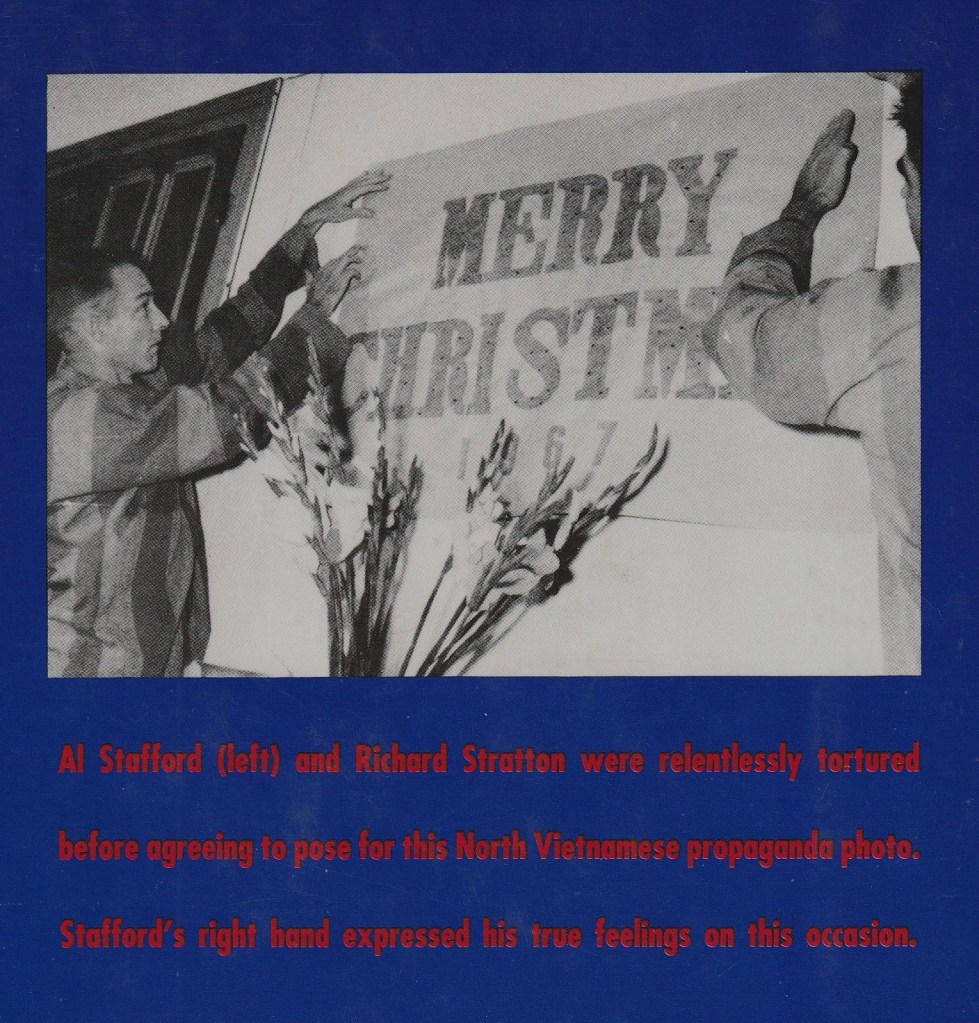
The next time I saw Al was ten years later on television. It was 29 January 1969. I was sitting comfortably in my suburban living room in San Jose, California, idly watching the evening news on NBC, when they showed a clip of two emaciated Vietnam POWs hanging a Merry Christmas sign on a wall. I did a double-take when I realized one was my old Sit, Sippin, and Singin Society buddy, Al Stafford. The other was Dick Stratton, whom I remembered from Chase Field in Texas. Until then, I had largely avoided all the controversy surrounding the war. I had put the military behind me and decided to let Johnson, McNamara, and the generals run the war. Suddenly, the war was right there in my living room. I was struck with a new understanding of why pundits were calling the Vietnam War “the living room war.”
What I didn’t understand at the time was the relentless torture the two men had undergone before agreeing to pose for the North Vietnamese propaganda photos. Nor did I notice Al’s right hand with the middle finger raised, expressing his true feelings about the occasion. However, Al told me later that US Military Intelligence took note, and his subtle message helped set policy at the time.
For most of America, the enormity of the Vietnam POW experience would not be realized until the victims could tell their stories after Operation Homecoming in 1973. While the conflict continued, the Johnson administration kept such information classified. I wrote letters to the Navy Department and State Department, asking how to contact POWs, and was referred to the Red Cross. So much for country boy naivety.
Al was flying an A-4 Skyhawk off the USS Oriskany when he was shot down over Hanoi in 1967. His replacement pilot was a fellow named John McCain, who was shot down a few months later.
In 1990, Al collaborated with author Geoffrey Norman and published a book called “Bouncing Back: How a heroic band of POWs survived Vietnam.” In it, he relates an interesting anecdotal insight into the Stafford-McCain relationship.
The Al Stafford I knew was a bit of a renegade. Incarceration did little to change that. He delighted in pushing his captors’ patience to the limit. Not surprisingly, he was rewarded with more than his fair share of time in solitaire. He was enduring an extended stay in an isolation cell called the Corncrib at the prison called the Plantation when he first encountered John McCain. The following excerpt from Bouncing Back describes that encounter.
“Then, one morning as he [Stafford] stood at the door, watching through the cracks, he saw a POW on crutches being led slowly across the yard by a guard. The man had shockingly white hair, almost as though he had suffered some traumatic fright. Stafford knew that the man had to be John McCain. Nobody else in the Navy had hair like that.
“…As Stafford watched, McCain detoured out of his assigned path and hobbled a painful fifteen or twenty feet on his crutches before the guard could stop him. By then, he was standing directly in front of Stafford’s cell.
“Hey, Al, baby,” he said cheerfully as though they were meeting on the street somewhere. “You hang in there, now. Don’t let the bastards grind you down.”
The Vietnam POWs networked in many ingenious ways. One method was to hide notes for each other in secret stashes. Al found one such note from McCain when he was allowed an infrequent bath. It explained that he [McCain] had been Stafford’s replacement in VA-163 on the Oriskany, and that, like Stafford, he had been shot down, captured, and through the all too familiar interrogation routines the POWs endured, including the torture chamber they called the Green Knobby Room at the Hanoi Hilton. McCain noted that he had also been moved to their present location, the prison they called the Plantation, and ended with these words: “Listen, Al, since I seem to be following you around, I would appreciate it if you didn’t do anything stupid and get us both in real trouble.” John McCain had his share of detractors in later political life, but they didn’t know him when he flew wing during trying circumstances.
Al and I reestablished contact a few years after his release in 1973 and kept in touch, more so with the advent of the internet. In 1999, I received an Email in which he stated that there was an upcoming POW reunion in Wenatchee, Washington. He planned to attend and make it a nationwide road trip from his home in Pensacola, Florida. He planned several stops before he got to my place in Hauser Lake, Idaho, followed by a stop in Spokane to visit fellow POW Jim Shively. From there, he planned to proceed to the reunion and then travel to San Diego to see his daughter before returning home via the southern route. He made the trip, and he and I had a grand reunion of our own.
In 2003, I received a notice from Al’s wife, Sharon, that he had flown west on 28 December 2003 at age 68. They held a memorial service for him at the Naval Aviation Museum in Pensacola. He is missed but not forgotten.
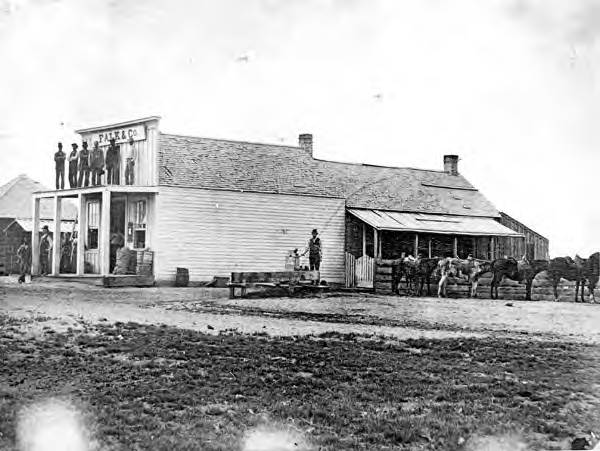
The Falk’s Store in Falk’s Store, circa 1892. Courtesy of the Idaho State Historical Society Digital Collection
“What are you doing here?” I asked the little group of people milling around my pasture.
“We’re looking for buried treasure,” the big fellow scanning the ground with a metal detector said with a laugh. He glanced around at his five or six cohorts for assurance.
“Why here?” I asked.
“You never know what you’ll find where an old trading post used to be,” he answered.
Perplexed, I asked, “What old trading post?”
“Why, the old Falk’s Store. Don’t you know?” he said.
I didn’t know, but I didn’t let on. New to the neighborhood, I didn’t want to seem unneighborly. “Well, okay, but please don’t leave a mess,” I admonished them and stalked back across the field to the house. That was my introduction to the fact that my new homestead held more than a passing historical significance. It was, in fact, the home of a vanished pioneer community. It was the site of Falk’s Store, Idaho.
In the fall of 1969, I took a job with Boise Cascade and moved my family (wife Kathy and sons Frank and Rob, ages 12 and 11) away from the urban madness of the 1960s San Francisco Bay Area to the relative sanity of Boise, Idaho. Boise still had a small-town feel and, to me, offered a much better lifestyle than San Jose, California. However, it was still a city, not a place where you could grow your food, raise livestock, and experience the freedom of a rural lifestyle. We set up housekeeping in a rented house in Boise and began searching for our piece of paradise.
Following many weekends of canvassing the countryside and looking at small acreages, we finally found the answer to our quest—sixty acres of irrigated pasture in the Payette Valley near the small farming town of New Plymouth. The location involved a 35-mile commute to my job in Boise. But after suffering commutes of similar distances on the crowded freeways of California, thirty-five miles of open country road presented no problem. We replaced the old ramshackle farmhouse that came with the property with a modern Boise Cascade Manufactured Home, replaced the outhouse with a modern septic system, hooked up the well and electricity, and moved in.
While an invasion by local amateur archaeologists was not exactly to my liking, it did pique my curiosity. I grew up in Eastern Oregon, and for as long as I could remember, the name Falk had been synonymous with quality merchandise. Falk Mercantile Company, headquartered in Boise, had stores scattered over most of Idaho and Eastern Oregon. To discover that I owned the site of the original Falk Store seemed peculiar.
Nathan Falk was born in Eggenhausen, Bavaria. He emigrated to New York City when he was fifteen, then took passage to San Francisco via the Isthmus of Panama. He joined his brother David in the frontier town of Boise in the spring of 1864.
The brothers opened a store they named Falk & Co. in the Payette Valley near the Placerville-Umatilla stage stop. The Falk Store post office soon followed, and the town of Falk grew up around it. By 1877, the town had developed into a thriving community, boasting two stores, a hotel, a saloon, a meat market, and a blacksmith shop. According to one account, “Everything that the pioneer family needed was carried in stock or could be ordered by stage from Boise. Customers came from as far as Malheur River in Oregon, Weiser River, Middle Valley, and Indian Valleys in Idaho.” In the 1870s, the gossip said that Falk’s store alone did an annual business of $60,000.
During the Nez Perce and Bannock Paiute wars and intermittent raids of the late 1870s, the locals erected a fort at the store. When Indians were spotted, and signal fires burned on the hills surrounding the valley, settlers would turn the cattle and hogs loose, hide the most valuable pieces of furniture in the sagebrush, and hightail it to the fort with all the women and children.
Even though the community continued to grow, Nathan Falk moved back to Boise and joined his brothers, David and Sigmund. They created the Falk Mercantile Company, which went on to dominate merchandising in Idaho and Eastern Oregon for more than a hundred years.
The coming of the railroad at the turn of the century marked the end of the stage stop at Falk Store. The town fell into decline even as other towns in the valley, Emmet, New Plymouth, and Payette, continued to flourish. On February 7, 1922, fire gutted the last general store at the settlement. The other buildings fell into disrepair and either burned or were torn down. When we moved there, the little clump of trees near the county road was all that remained—mute testimony to the temporary nature of man’s footprint on planet Earth.
As a farm family of the 1960s, we LaRues quickly adjusted to the rural lifestyle our new home had to offer. We stocked our place with a small herd of cattle and horses and raised chickens. The plot we fenced and had a neighbor plow for a garden somehow never reached fruition. But we did keep the pastures irrigated and even milked a few cows and shipped milk to the creamery in Payette. The boys were good athletes and matriculated into the New Plymouth school system without incident.
In the beginning, our neighbors viewed us with a degree of suspicion. I suppose seeing a guy going off to work in a business suit came as something of a surprise. But with time, we gained acceptance. I traded my sports car for a pickup truck and my Florsheim oxfords for a pair of Tony Lama boots. However, I could not shed the business suit, and the employees at the Farmers Feed & Seed in Emmet viewed me with some degree of amusement when I pulled up for a load of grain on my way home from work.
We lived in the Payette Valley for about four years and eventually sold out and bought a real working ranch near my parents’ place in North Central Oregon. When they say, “You can take the boy out of the country, but you can’t take the country out of the boy,” they may have been talking about me.
“What do you think of the Black problem?” (only he didn’t say Black), the taxi driver asks. As a nineteen-year-old Apprentice Seaman fresh out of boot camp San Diego, I am hard-pressed to answer. The year is 1956, and before joining the Navy, a small farming town in the mountains of Northeast Oregon had been my universe. People of color did not exist in that universe. My only contact with people of color had been with a few Negro recruits in boot camp.
The driver had picked me up at the New Orleans airport for a ride to the bus station. Noting my navy blues and sea bag, he had already quizzed me enough to know that I was from the West Coast and bound for Pensacola, Florida. In my naiveté, the only answer to his question I could think of was that I didn’t know there was a problem. This gave the driver his opening. For the rest of the ride, he regaled me with his version of the history of the South’s racial problems and how the rest of the country had better take notice because big trouble was brewing. I was relieved to escape his tutelage and board the bus.
For me, the 200-mile ride along the Gulf Coast was enlightening. The bus stopped at seemingly endless towns, villages, and crossroads. Watching the cross-section of humanity exiting and entering the bus was fascinating. Seeing the mansions along the route, shaded by leafy trees above sloping lawns, was like seeing something out of the movie Gone with the Wind. I had joined the Navy to see the world, and this was my first real taste.
My fellow passengers seemed well-disciplined and accepting of their way of life. The colored people automatically moved to the back of the bus, and the white people took the front seats. All bus stations had three bathrooms. One was marked men, one was marked women, and one was marked colored. Apparently, gender separation was not considered important for the colored population. And there were always two drinking fountains, one marked white and one marked colored. If there was a lunch counter or waiting room, these were also segregated. For a lad from the West, there seemed to be a lot of wasted duplication in the South. But my short stint in the Navy had taught me that “mine was not the reason why.” The racial tension the taxi driver had warned of did not seem to exist.
I reported to Naval Air Station Pensacola and was quickly inducted into the preflight regimen. As anyone who has undergone military flight training knows, the next year and a half allowed little time for pondering society’s problems. And after graduation, my lifestyle was mainly apolitical while serving as a fleet Naval Aviator. The warrior’s job is to keep the country safe so the folks at home can deal with such matters.
In the 1960s, I returned to civilian life and settled in the San Francisco Bay Area. I enrolled in college, first at Foothill College and then at San Jose State, and went to work at Lockheed Missiles and Space Company in Sunnyvale. Perhaps brought on by my academic endeavors or maybe simply because I had acquired a television set of my own, I found myself taking a greater interest in the news. The civil rights movement was gaining momentum. In 1963, images of Governor Wallace standing in a doorway at the University of Alabama blocking two black students from registering, and the National Guard breaking up the standoff, filled the news and airways. The March on Washington and Martin Luther King’s “I Have a Dream” speech followed shortly thereafter. Right after that, a bomb at the 16th Street Baptist Church of Birmingham killed four young girls.
The taxi driver’s warning from days gone by took on new meaning!