Monument to Confederate dead, Arlington National Cemetery, Arlington, Va. (Universal History Archive/Universal Images Group via Getty Images)
Here’s a little note I penned in 2023.
In George Orwell’s dystopian novel, “Nineteen Eighty-Four,” the main character, Winston Smith, is a member of the Outer Party who works at the Ministry of Truth, where he rewrites historical records to match the state’s ever-changing version of history. Winston revises past editions of The Times, while the original documents are destroyed when they are dropped into ducts called memory holes that lead to an immense furnace. He secretly opposes the Party’s rule and dreams of rebellion, even though he knows he is already a “thought criminal” and will likely be caught one day.
In today’s real world, Defense Secretary Lloyd Austin on Thursday signed off on an independent commission’s recommendations to rename military bases that honor Confederate officers and scrub a long list of references commemorating the southern rebellion.
The Naming Commission, established by Congress last year, inventoried all the military’s current references to the Confederacy. It found nine Army bases and several buildings commemorating rebel officers, as well as a monument honoring Confederate soldiers at Arlington National Cemetery.
“The names of these installations and facilities should inspire all those who call them home, fully reflect the history and the values of the United States and commemorate the best of the republic that we are all sworn to protect,” Austin, the first Black defense secretary, said in a statement in which he said he agreed with the commission’s recommendations.
The following nine bases are scheduled to be renamed:
Fort Benning, Georgia — Fort Moore
Fort Bragg, North Carolina — Fort Liberty
Fort Gordon, Georgia — Fort Eisenhower
Fort A.P. Hill, Virginia — Fort Walker
Fort Hood, Texas — Fort Cavazos
Fort Lee, Virginia — Fort Gregg-Adams after two Black service members, Lt. Gen. Arthur Gregg, a supply logistician who helped desegregate the Army, and Lt. Col. Charity Adams, who oversaw mail distribution in Europe during World War II
Fort Pickett, Virginia — Fort Barfoot
Fort Polk, Louisiana — Fort Johnson after Sgt. William Henry Johnson, a Black soldier in World War I who was awarded the Medal of Honor in 2015
Fort Rucker, Alabama — Fort Novosel after Chief Warrant Officer 4 Michael J. Novosel Sr., an Army aviator during the Vietnam War who flew 2,543 extraction missions and rescued more than 5,500 wounded soldiers
“Every record has been destroyed or falsified, every book rewritten, every picture has been repainted, every statue and street building has been renamed, every date has been altered. And the process is continuing day by day and minute by minute. History has stopped. Nothing exists except an endless present in which the Party is always right.” (Orwell, George. 1984. New York: Signet Classic, 1950.)
(Author’s note: The Monument to the Confederate Dead was taken down and stored by the Defense Department in 2023. In 2025, the Pentagon announced it will refurbish the memorial and return it to Arlington in 2027, near the burial site of its sculptor, Moses Ezekiel.)
John Phillips and I belong to an aviation society called th Quiet Birdmen. Here is the society’s magazine article I submitted following John’s address on August 3, 2026.
John Phillips SpeakingSoyuz Spacecraft
John flew to the International Space Station three times. The first was in 2001 on the space shuttle Endeavor for 13 days to help build the station. The third flight was also on the shuttle toward the end of construction. Between those, in 2005, he went up on a Russian Soyuz FV rocket and spent six months there.
The Soyuz FV is of ICBM heritage. There have been more Soyuz launches than any other rocket in history. So why were we going up on Russian rockets?
John pointed out that in the early days of the ISS, mixing crews of Russian and American astronauts was just sort of a sharing thing. Then in 2003, the Columbia crashed, and the shuttle didn’t fly again for about two years. That’s when he went up on the Soyuz. And then from 2011, when we ended the space shuttle program, until we started flying the Crew Dragon, the SpaceX vehicle, there were another nine years when the only way up there was on a Russian rocket. So, we had American crews training in Russia, learning to be flight engineers on a Russian rocket. And he said that the vehicle you go up in is your lifeboat the whole time you’re there. There have been some exceptions, but for the most part, you ride a vehicle up there; it’s your lifeboat for six months, and you ride the same vehicle down.
The capsule consists of three modules designed to carry a three-person crew. You take off and land in the middle module. The front module is kind of a living area. The aft module contains equipment and is not even pressurized. After takeoff, you move from the middle module to the front module, and as John explains it, it goes from being three guys in the backseat of a Volkswagen to three guys in a minivan.
John trained for three years, splitting time between Star City outside of Moscow and Houston. He notes that the training was interesting but demanding, and he was always tired. Then, as launch time neared, he found the differences between NASA’s engineering culture and Russian culture interesting. There is not a lot of ceremony prior to a NASA launch. But the Russians treat every major event like it’s sacred and it’s a party.
The launch actually occurs at a base in Kazakhstan. It’s at 46 degrees of latitude. When you launch a spacecraft, to get the most boost from the Earth’s rotation, you launch due east. But to launch due east from the base would mean dropping rocket parts over China. So the ISS orbits at an inclination of 51.6 degrees because of a combination of physics and geopolitics.
Some of the rituals prior to a Russian launch involve putting flowers on Yuri Gagarin’s grave, watching a movie set in Kazakhstan that one crew failed to watch earlier and had a bad trip, letting a priest splash water on your face with a brush, and following Yuri Gagarin’s tradition and peeing on the shuttle buses’ tires.
The launch sequence is smooth. Right after liftoff, you only feel 1.38 g’s. But as fuel burns off, you accelerate to 4.5 g’s. The whole thing is pre-programmed, and you are just along for the ride. Once you reach orbit, you shut everything down and nap for 24 hours until the rocket catches up with the space station.
John’s talk included much more detail than we can cover here and took us all the way until he was back on terra firma. Thank you, John, for making our meeting most interesting.
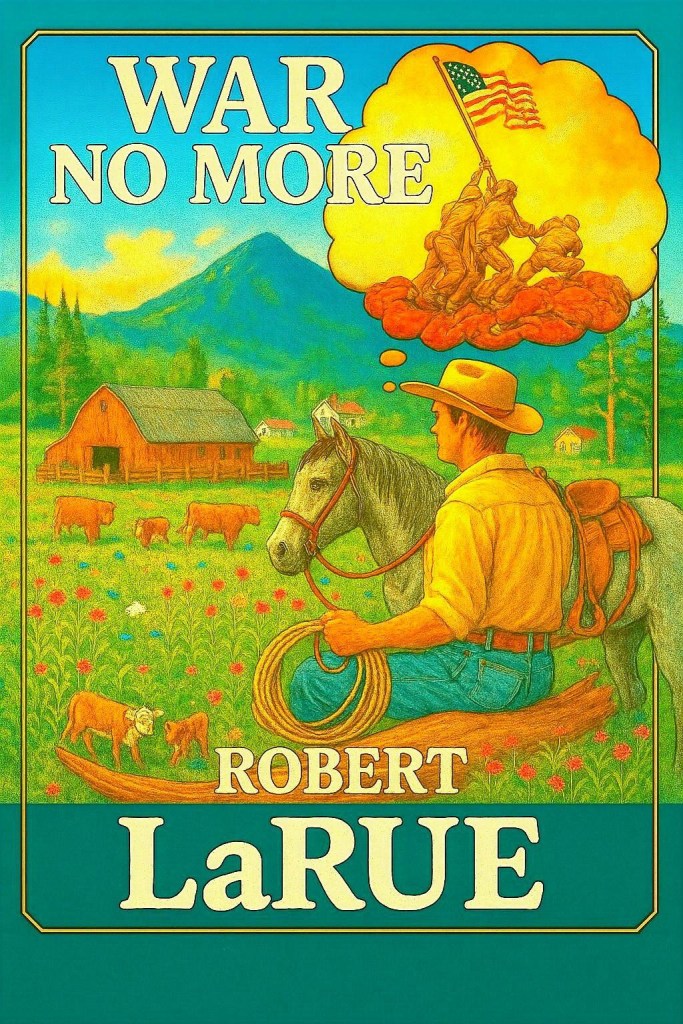
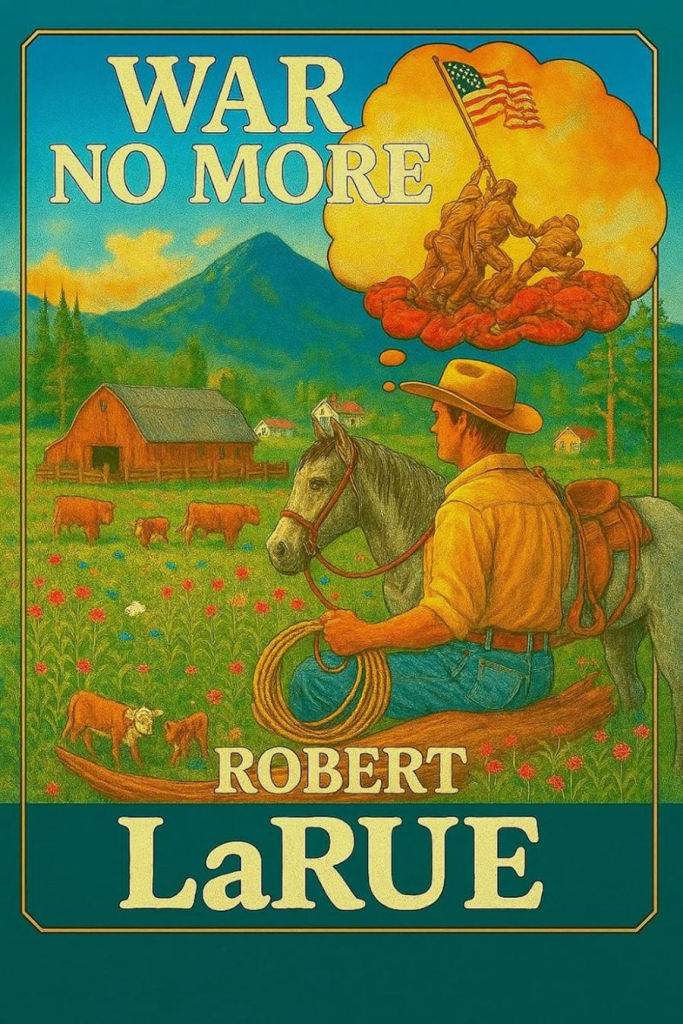
Opening Scene: Chapter 1 finds PFC Paul Harper far from home on the island of Guadalcanal in the South Pacific during World War II. Discover how he survives the perils of war and finds new life on a cattle ranch in the mountains of North Idaho.
Available on Amazon Kindle Unlimited for free, $3.99 to buy, or as a paperback, $14.99.
Paul Harper hunkered down in a shallow foxhole —his first taste of combat. The rest of his squad strung out in similar hastily dug foxholes to his left and to his right. He swatted at clouds of insects trying to eat him. He listened to sporadic gunfire raining down from the ridge above and kicking up small showers of dirt. While clinging close to the ground, he prayed silently, “Please don’t let one of those bullets find me.” He listened to the whine of mortar rounds flying overhead and exploding on the hill in front of him. The sound of screams as artillery found its mark sent shivers up his spine.
The death and destruction around him were not exactly what he had in mind when he signed up and swore to defend God and Country. This was not the larger-than-life hero’s role of protecting his country from a vicious yellow peril he had envisioned. Like thousands of fellow patriotic young men, Paul had peeled that role off a cinematic screen in two-dimensional images of black and white film. What he saw now included all three dimensions and came through in vivid living color. He was stuck on a small spit of land in the middle of the Pacific Ocean, risking life and limb to defend a ragged little airfield some fools had planted there. He could not see how this had anything to do with defending God and country. He was clear on the other side of the world.
Out of fear and confusion, Paul found an epiphany that day. Times were tough growing up during the Great Depression. His father struggled hard to keep food on the table. Like many of his neighbors in Otis Orchards, Washington, Sam Harper supplemented what the family grew in the garden and what he could afford at the grocery store with the meat of wild game from the surrounding mountains and countryside.
However, unlike the hunter-gatherers from generations past, he had to contend with game laws and hunting seasons. The age-old contest between prey and predator now held a new element. The prey now had the game warden and a network of spies and snitches to aid it in the age-old equation. Paul learned early on from his father not only how to stalk and kill wild game, but also how to do it without being seen. This was his epiphany. He had to figure out how to apply those same principles to his present predicament. He knew this from the bottom of his gut. The prey he now stalked could become the predator that would kill him if he failed to figure it out.
Paul peered over the lip of his foxhole. In front of him was an open area, cleared to expose anyone attempting to advance up the hill. Behind him and off to both sides was more of the seemingly endless deep jungle his platoon had been struggling through. The mortar rounds flying overhead and the rifle fire raining down the hill told Paul that he was directly in the line of fire between two opposing forces. He knew from training exercises that it was only a matter of time before the thump-thump of the battery behind him would cease, his sergeant would wave his arm forward, and pass the command, “Move out.” His squad would advance from the cover of the jungle and race fully exposed across the clearing. At that point, survival would have nothing to do with skill or cunning. It would simply be a matter of fate and statistics. The whole operation contradicted everything he had learned while growing up. In his world, you always maintained your cover.
At that point, Paul’s mind quit reasoning. Instinct took over. He slithered over the edge of the foxhole and crawled deeper into the undergrowth. He was back home on Mount Spokane, stalking a deer or elk. He crept through the jungle and worked his way to the right side of his platoon, off to where running water formed a small cut down the hillside. He buried himself in that shallow canyon and climbed about halfway up the hill before the rest of his platoon started its advance.
Paul looked back to his left as the platoon began its charge across the clearing. First one man, then another, and then still another fell as the main force of stooped-over running men moved forward. Medics ran out of the trees and gathered the wounded and dead as the charge continued. Paul resumed his advance, swimming and crawling up the muddy canyon. He reached the summit and dropped into the cover of jungle growth.
He watched as his platoon mates struggled up the hill against a withering rat-a-tat of machine gun and pop, pop, pop of rifle fire. He could see along the ridge where Japanese soldiers formed a line, well dug in and fortified. By now, his platoon was about halfway up the hill and stalled. Confusion reigned as the platoon lieutenant moved squads from one position to the next, trying to break through the gunfire.
Between his vantage point and the enemy line, he spotted a figure hiding in the branches of a tall tree. At first, he thought it was an animal. He shifted his position a little to get a better line of sight through the dense growth of his cover. He could now see clearly that it was a man. He watched as the spotter, sniper, or whatever he was, put something to his mouth and pointed with his free hand. Instantly, the machine guns on the hill re-aimed and chattered in rapid fire. Paul then sensed his mission. The man in the tree relayed his platoon’s every move to the machine gun battery. He had to be silenced.
Paul gauged the distance between his position and the man in the tree. He knew from hunting game that it was too great to ensure a clean kill. His father’s words came back to him. Make sure you are in a position to get a good, clean kill. The last thing you want to do is track a bleeding deer across an open snow-covered field.
He smiled a bit at the irony of the comparison. The chance of snow on Guadalcanal was about the same as the chance of snow in Hell. Even so, the principle remained the same. He did not want his quarry to spot him and give away his position. He inched forward toward the man in the tree.
At about 75 yards, Paul flattened out on the ground in a patch of tall grass. He parted the blades carefully, just enough for a clear line of sight to his quarry. He eased his rifle to his shoulder and carefully aimed from the prone position. He watched as the spotter lifted his radio microphone to his mouth, then squeezed off a single round. Instantly, the radio went flying and crashed to the ground. The man stretched and shuddered for an instant, then tumbled through the branches until some combination of limbs caught him, and he just hung there. Paul beat a hasty retreat to his hiding place, knowing that the enemy would be all over the place as soon as they realized they had lost their spotter.
Without the spotter’s eyes and ears for guidance, the machine guns quickly lost their effectiveness. Paul’s platoon promptly took advantage of the situation, and soon soldiers were pouring over the crest of the hill. Rifles fired, grenades exploded, bayonets thrust, and in short order, the hill’s ownership transferred to American hands. A squad of Americans advanced toward three Japanese soldiers milling around under the tree where the dead spotter hung. It was not Paul’s squad, but he unobtrusively joined in as the Americans overwhelmed and disarmed the Japanese. One of the Americans spotted the man hanging from the tree in a Japanese uniform with his head blown partly away, said, “What in the hell is that?”
“Looks like a Jap with his head half blown off,” another soldier said.
The squad leader, a battle-hardened sergeant, looked up. “Appears to me that somebody got himself a spotter here,” he allowed. He looked around and riveted Paul with a steady gaze. “Would that be you, Private?”
“Yes, Sergeant,” Paul answered.
“What the hell were you doing here? Where’s your outfit, and why aren’t you with them?”
“Well, I saw this guy in this here tree signaling somebody when we were pinned down on the hill down yonder, and so I just snuck up on him and shot him.”
“And just who in the hell told you to do that?”
“Well, actually, nobody. I just kinda did it.”
“Okay, Private, I don’t know whether to put you on report or pin a medal on you. I’ll let your squad leader decide about that. For right now, we need to get this pile of shit bunch of gooks over there with that other bunch of bastards we captured this afternoon. Move ’em out, men.”
News travels fast. When Paul rejoined his squad, his exploits were already general knowledge. His squad leader, Sergeant Kelly, first dressed him down for getting lost from his comrades and then congratulated him on his kill. His platoon leader, ninety-day-wonder master of eloquence Lieutenant Pringle, singled him out for “exhibiting unusual personal initiative in the face of danger by taking out a strategic member of the enemy force single-handedly” in front of the whole platoon when they camped that evening. The fact that he had managed to keep himself out of the line of fire was enough for Paul. The accolades were gravy. He knew he could just as well be receiving reprimands. A favorite platitude among the troops was “There’s a right way, a wrong way, and the Army way.” Paul Harper was beginning to understand what it meant.
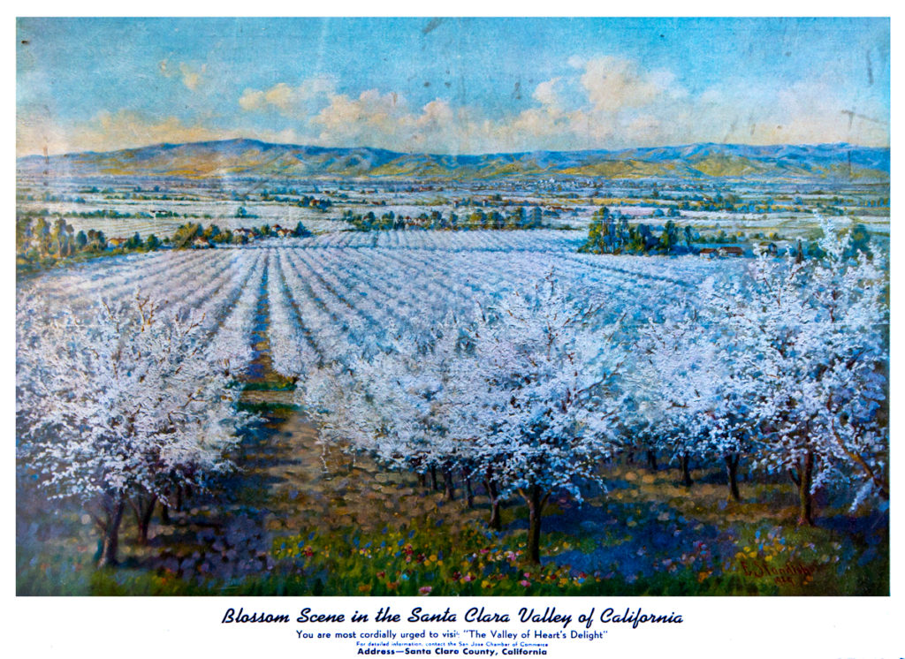
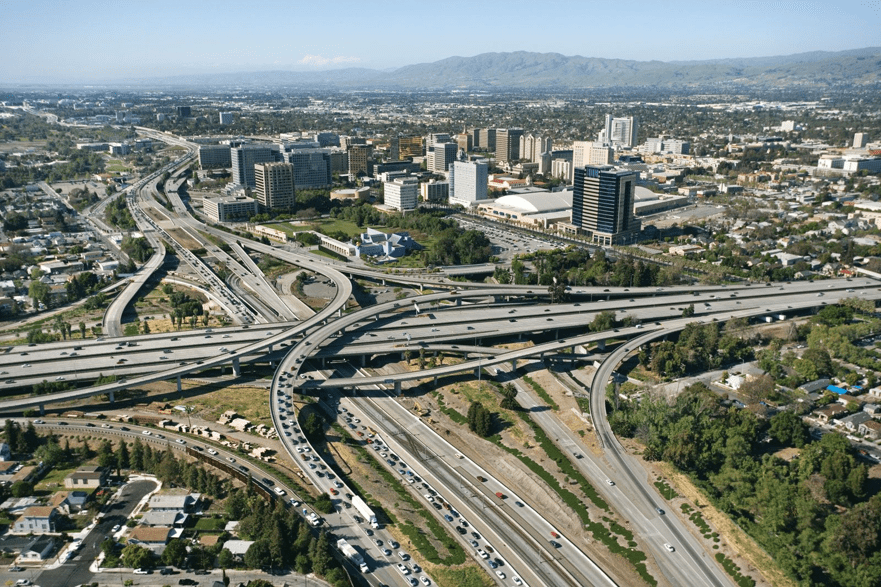
A Half Century of Progress? (Note the same mountains in the background)
When the ancients wrote of the Garden of Eden, they may well have used California’s Santa Clara Valley as their model. “And out of the ground made the Lord God to grow every tree that is pleasant to the sight, and good for food ….” Genesis 2:9. Or so it seemed until an enigma called Silicon Valley took root.
The valley, named after the Spanish Mission Santa Clara, was long known as the Valley of Heart’s Delight for its high concentration of orchards, flowering trees, and plants. Until the 1960s, the Santa Clara Valley, with 39 canneries, was one of the largest fruit-producing and packing regions in the world. That all ended as a new class of urban developers descended like locusts to root the trees and trample the land like a herd of Monterey Wild Boar in a cabbage patch.
Bulldozers uprooted orchards and vineyards. Cookie-cutter housing tracts popped up in their wake. Strip malls, shopping centers, factories, and office buildings sprang up where quaint homesteads and villages once stood. Ever-widening streets and new freeways couldn’t keep up with the demands of ballooning traffic.
Fresh out of the Navy, I hit the Bay Area in 1960, driving a 1958 Chevy Bel Air with payments due and about $200 in my pocket. Nine years later, I had a wife, two kids, a house in the suburbs with a 30-year mortgage, a 1969 Ford Country Squire station wagon with fake wood trim, and a 1963 Austin Healey 3000 sports car. I worked as a scientific computer programmer in the Information Sciences Department of Fairchild Semiconductor International, Inc.—the seat of the new silicon technology. Some would say that I had made it. I was not so sure.
Sitting in my Austin Healey with the top down, awaiting a turn to get on the new 280 freeway, I watched the river of traffic flow by. The smell of horse manure caught my attention as a pickup truck towing a horse trailer rattled down the highway. I was transported back to my youth, growing up on a ranch in Eastern Oregon. The old saying—you can take the boy out of the country, but you can’t take the country out of the boy—invaded my mind as I joined the throng of indistinguishable commuters on their way to work.
What should I do? Conventional wisdom told me “Stay where you are.” My gut told me “It’s time to move on.”
I compiled a list of every small-town business and institution in the area west of the Rockies I could locate that used a computer. I mailed an unsolicited job resume to each of them. That effort did not involve a lot of resumes at that time in history, but it did result in a job offer from Boise Cascade Corporation in Boise, Idaho.
In the autumn of 1969, amidst much wailing and gnashing of teeth by my in-laws over the tearing away of their only daughter and two grandsons, we watched as the moving van pulled away from our driveway on its way to Idaho. My wife, two sons, and I followed shortly thereafter—on our way to new beginnings. Our lives would be forever changed. My sports car would soon be transformed into a pickup truck. Hard work and clean air would be our future. Silicon Valley would be our past.
The Back to the Land movement of the seventies was just beginning. I don’t know if I was a part of that movement, or if I was simply returning to my roots. But I guess I lived it. How could a country boy know for sure?
A lot of the social interaction in the novel War No More takes place in and around the Hotel Pend Oreille. The model for the hotel is the historic Hotel Charbonneau, now a National Historic Place.
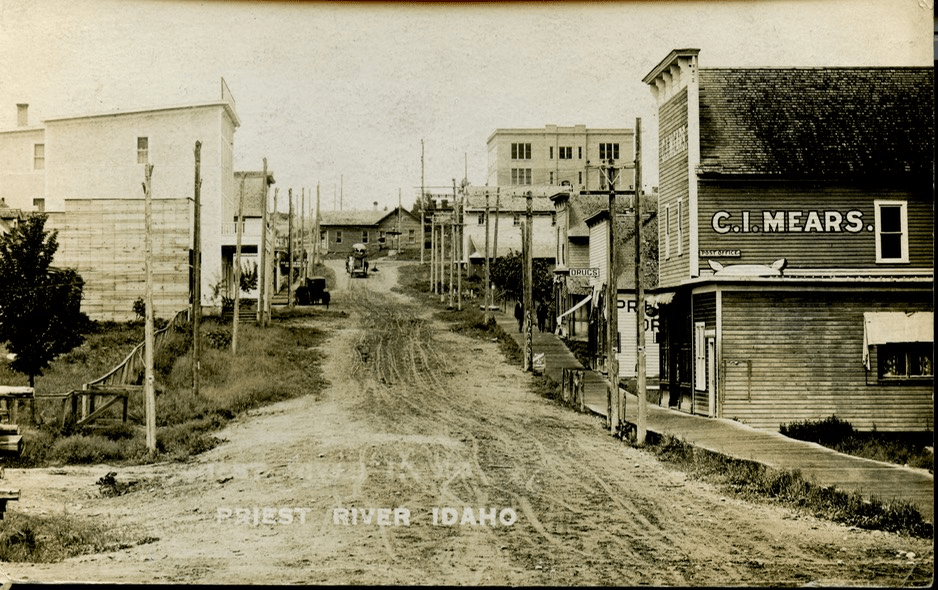
The Hotel Charbonneau was originally constructed in 1912 by Charles and Dora Charbonneau (architects PJ Young and Charles Charbonneau). During the first half of the 20th century, Priest River and the Hotel Charbonneau, which is located one block away from where the train station used to be, was a popular stopping-off point for people traveling to nearby Spokane, Coeur d’Alene, Sandpoint, and Priest Lake. In 1920, Dora Charbonneau added a brick addition onto the south side of the hotel to accommodate more guests. After the brick addition was built, the Hotel Charbonneau boasted 27 guest rooms with more than half of them having their own private bathrooms; an extravagant luxury at that time.
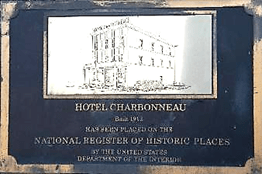
The Charbonneau operated as a hotel/boarding house until the late 1980s, when it was abandoned and risked being condemned. In 1991, the Priest River Restoration and Revitalization Committee (PRRRC), a local non-profit group composed entirely of volunteers, took control of the Hotel Charbonneau and saved it from complete deterioration. Among the PRRRC’s accomplishments was having the Hotel Charbonneau added to the National Register of Historic Places (11/19/1991), which protects the historic structure for future generations.
You can see the Hotel Charbonneau in the 1914 photo above on the left. The photo was taken before the brick addition was built. https://hotelcharbonneau.com/history.html
The following pictorial shows the hotel and surroundings as they exist today. War No More is available on Amazon https://www.amazon.com/War-No-More-Robert-LaRue-ebook/dp/B0GC9MKK7N free on Kindle Unlimited or $3.99 to buy, $14.99 for the paperback. Check it out. (Photos by the author.)
Hotel Charbonneau (Fictional Hotel Pend Oreille in War No More) as it appears today.
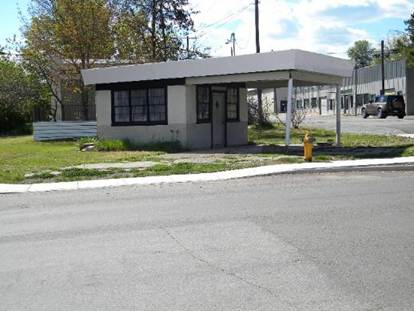
Abandoned filling station (Seaton’s Garage in the novel).
National Register of Historic Places placard at the entrance of the hotel.
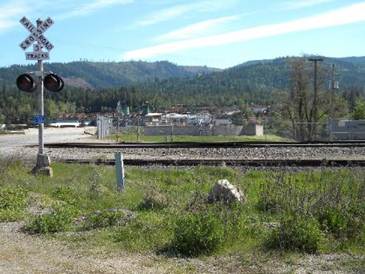
The railroad tracks still run by, but the depot is long gone.
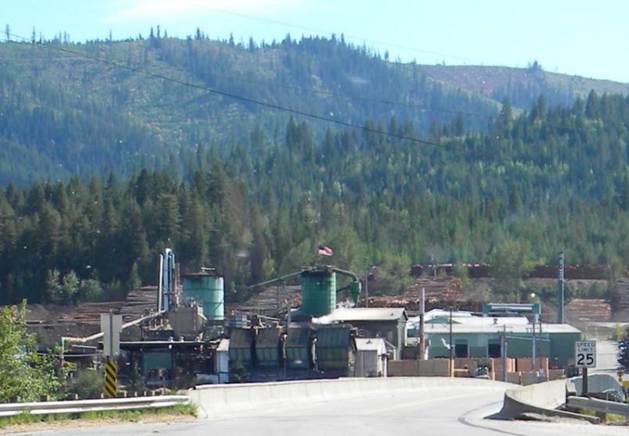
But they still saw logs at the mill across the river.
Airmen on the line suffered a terrible toll during Operation Rolling Thunder, a codename for an American bombing campaign during the Vietnam War. Originally slated as an eight-week campaign in spring 1965, it lasted until October 1968. While Lyndon Johnson and Robert McNamara played war and handpicked targets from the armchair comfort of the White House, an estimated 900 aircraft went down as U.S. forces delivered 643,000 tons of destruction.
One of those downed aircraft was piloted by my friend Al Stafford. I first met Al when we were stationed at NAS Whidbey Island, Washington, in the late 1950s. Whidbey Island was a rather isolated duty station in those days, so the Officers Club served as the primary social outlet for young bachelor officers. There was an old upright piano collecting dust in one corner. Al could play a few chords. Not long after his arrival, he had a bunch of us gathering around the piano, singing old pilots’ favorites like “Torque me into the Runway” and songs remembered from college, such as “The Whiffenpoof Song.” We sang, sipped stingers, and smoked Pall Mall cigarettes into the night. We called ourselves the Sit, Sippin, and Singin Society. For some of us, that camaraderie would last a lifetime.
Al, Jim Turner, Chris Phelps, and I rented a house off base and formed what Naval Aviators call a Snake Ranch—a party pad occupied by bachelor officers. The house had an unfinished basement that we converted into a makeshift bar. For a time, the four of us presided over a version of Party Central until new assignments broke up the party, and we all moved on.
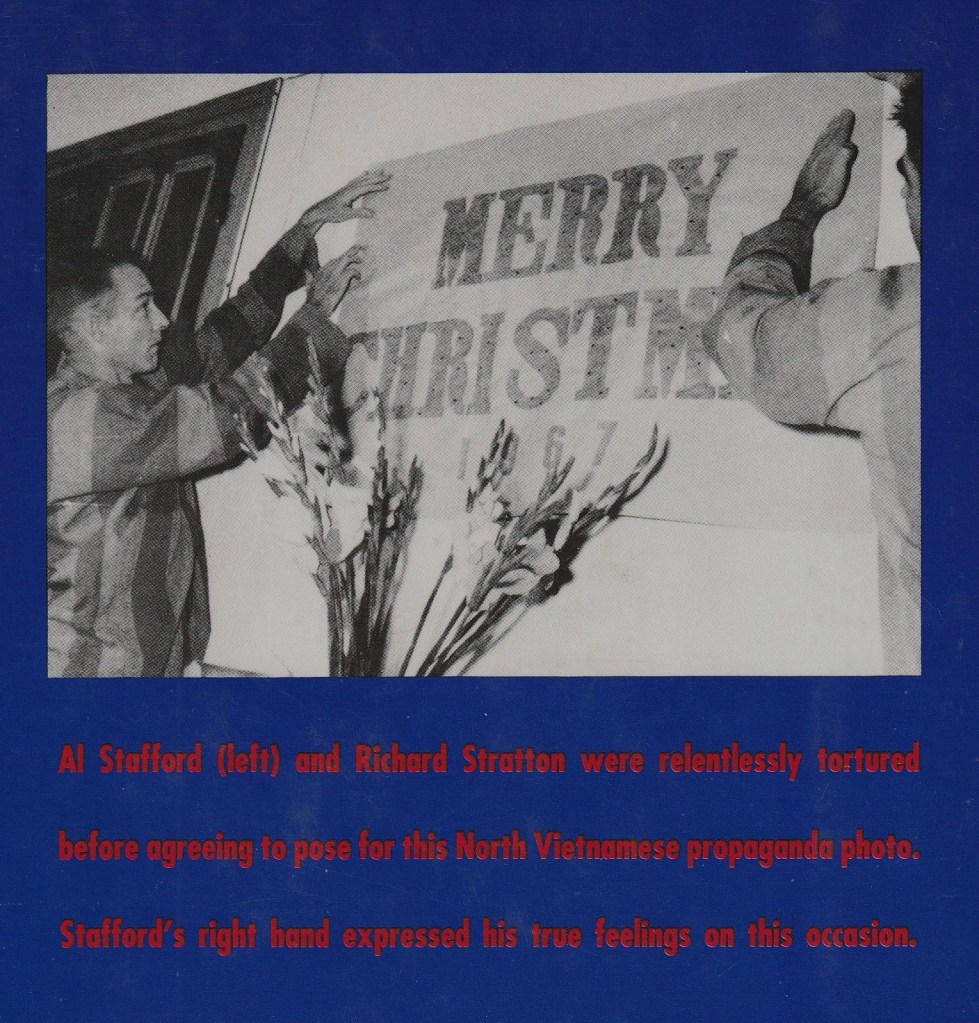
The next time I saw Al was ten years later on television. It was 29 January 1969. I was sitting comfortably in my suburban living room in San Jose, California, idly watching the evening news on NBC, when they showed a clip of two emaciated Vietnam POWs hanging a Merry Christmas sign on a wall. I did a double-take when I realized one was my old Sit, Sippin, and Singin Society buddy, Al Stafford. The other was Dick Stratton, whom I remembered from Chase Field in Texas. Until then, I had largely avoided all the controversy surrounding the war. I had put the military behind me and decided to let Johnson, McNamara, and the generals run the war. Suddenly, the war was right there in my living room. I was struck with a new understanding of why pundits were calling the Vietnam War “the living room war.”
What I didn’t understand at the time was the relentless torture the two men had undergone before agreeing to pose for the North Vietnamese propaganda photos. Nor did I notice Al’s right hand with the middle finger raised, expressing his true feelings about the occasion. However, Al told me later that US Military Intelligence took note, and his subtle message helped set policy at the time.
For most of America, the enormity of the Vietnam POW experience would not be realized until the victims could tell their stories after Operation Homecoming in 1973. While the conflict continued, the Johnson administration kept such information classified. I wrote letters to the Navy Department and State Department, asking how to contact POWs, and was referred to the Red Cross. So much for country boy naivety.
Al was flying an A-4 Skyhawk off the USS Oriskany when he was shot down over Hanoi in 1967. His replacement pilot was a fellow named John McCain, who was shot down a few months later.
In 1990, Al collaborated with author Geoffrey Norman and published a book called “Bouncing Back: How a heroic band of POWs survived Vietnam.” In it, he relates an interesting anecdotal insight into the Stafford-McCain relationship.
The Al Stafford I knew was a bit of a renegade. Incarceration did little to change that. He delighted in pushing his captors’ patience to the limit. Not surprisingly, he was rewarded with more than his fair share of time in solitaire. He was enduring an extended stay in an isolation cell called the Corncrib at the prison called the Plantation when he first encountered John McCain. The following excerpt from Bouncing Back describes that encounter.
“Then, one morning as he [Stafford] stood at the door, watching through the cracks, he saw a POW on crutches being led slowly across the yard by a guard. The man had shockingly white hair, almost as though he had suffered some traumatic fright. Stafford knew that the man had to be John McCain. Nobody else in the Navy had hair like that.
“…As Stafford watched, McCain detoured out of his assigned path and hobbled a painful fifteen or twenty feet on his crutches before the guard could stop him. By then, he was standing directly in front of Stafford’s cell.
“Hey, Al, baby,” he said cheerfully as though they were meeting on the street somewhere. “You hang in there, now. Don’t let the bastards grind you down.”
The Vietnam POWs networked in many ingenious ways. One method was to hide notes for each other in secret stashes. Al found one such note from McCain when he was allowed an infrequent bath. It explained that he [McCain] had been Stafford’s replacement in VA-163 on the Oriskany, and that, like Stafford, he had been shot down, captured, and through the all too familiar interrogation routines the POWs endured, including the torture chamber they called the Green Knobby Room at the Hanoi Hilton. McCain noted that he had also been moved to their present location, the prison they called the Plantation, and ended with these words: “Listen, Al, since I seem to be following you around, I would appreciate it if you didn’t do anything stupid and get us both in real trouble.” John McCain had his share of detractors in later political life, but they didn’t know him when he flew wing during trying circumstances.
Al and I reestablished contact a few years after his release in 1973 and kept in touch, more so with the advent of the internet. In 1999, I received an Email in which he stated that there was an upcoming POW reunion in Wenatchee, Washington. He planned to attend and make it a nationwide road trip from his home in Pensacola, Florida. He planned several stops before he got to my place in Hauser Lake, Idaho, followed by a stop in Spokane to visit fellow POW Jim Shively. From there, he planned to proceed to the reunion and then travel to San Diego to see his daughter before returning home via the southern route. He made the trip, and he and I had a grand reunion of our own.
In 2003, I received a notice from Al’s wife, Sharon, that he had flown west on 28 December 2003 at age 68. They held a memorial service for him at the Naval Aviation Museum in Pensacola. He is missed but not forgotten.
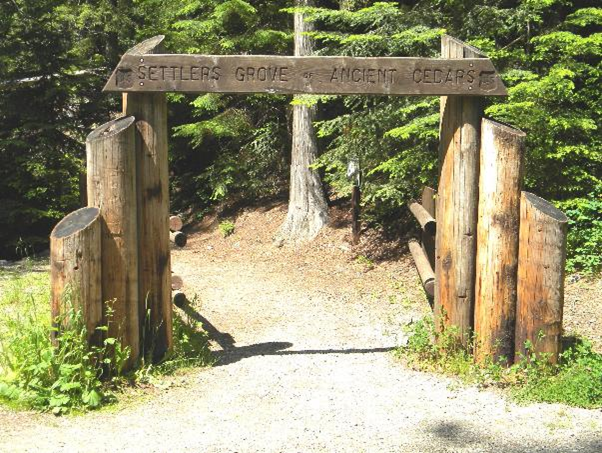
Tucked away deep in the mountains of North Idaho, a grove of ancient cedars silently watches the passage of time. When Wyatt, wife Sadie, and brother Jim Earp arrived at Eagle City in 1884, it was a bustling tent city—a gold rush town. The enterprising brothers purchased a round circus tent, 45 feet high and 50 feet in diameter, for $2,250 and opened a dance hall. Later, they opened the White Elephant Saloon. An advertisement in the Coeur d’Alene weekly called it “The largest and finest Saloon in the Coeur d’Alenes.” However, the Coeur d’Alene gold rush was short-lived, and today there is little to show that Eagle City ever existed. The site bears mute testimony to the temporary nature of man’s footprint with the passage of time.
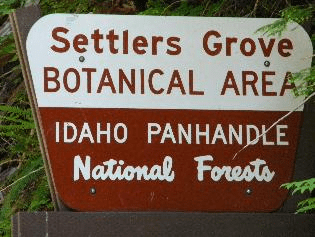
Exit Interstate 90 at Kingston, Idaho, and follow the Coeur D’Alene River for a little more than 20 miles across Prichard Creek. Turn right toward Murray for about 3.5 miles and cross Eagle Creek. Turn left, and you have arrived at Eagle City. From Eagle City, follow Eagle Creek and then West Eagle Creek for 5 or 6 miles to a Forest Service sign announcing, “Settlers Grove Botanical Area.”
The road ends in a large parking area with permanent restrooms. Park your vehicle and step back in time under the lintel of the grove’s open gate.
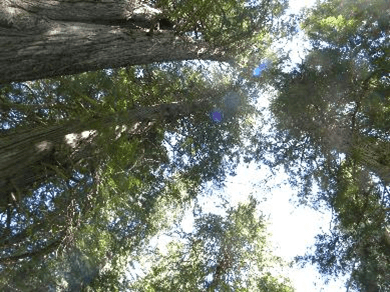
Settlers Grove, at 182 acres, is one of the last large stands of Western Redcedars in Idaho. While these trees are called cedars, they are actually a part of the cypress family. Mature trees stand well over 200 feet tall, and in Settlers Grove range up to 7 feet in diameter. The oldest trees in the grove are estimated to be 700 to 1,000 years old. Western Redcedars are primarily found in the coastal forests of the Northwest. However, a disjunct inland population exists along the southern British Columbia-Alberta border and in northern Idaho and western Montana.
The trail through the grove is well-maintained and easy walking. The treetop canopy filters sunlight into a dreamlike array of lights and shadows.
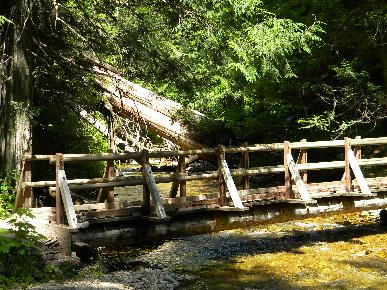
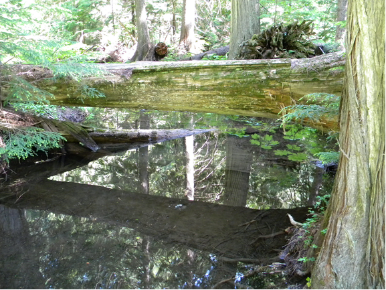
The creek winds along the trail and under bridges with an ever-changing pattern of bright refractions.
Sound becomes muted yet distinct: a bird’s chirp, a child’s voice, the babble of running water. The mind wanders, and time takes on a new dimension.
When Columbus proved the world was round, and Conquistadors first set foot on the golden shores of the New World, some of the trees standing in Settlers Grove had already lived 200 years or more.
When Lewis and Clark led the Corps of Discovery Expedition over the mountains a little south of the grove, these same trees had aged to 500 years.
During the building of the oldest manmade structure in Idaho, the Cataldo Mission, just downriver from the grove, the same trees had been alive for 550 years.
By the time of the Coeur d’Alene gold rush in the 1880’s, the trees were 580 years old.
The 130 or so years span from then until now represent little more than a single century out of seven to these ancient giants. Yet it covers our whole regional history.
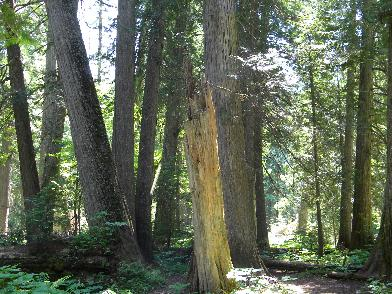
The trees have not gone unscathed. Uprooted trunks, broken-off stumps, and lightning scars lend stark evidence to the forces of nature the grove has endured.
Centuries of winter’s cold, summer’s heat, firestorms, ice storms, droughts, and floods have left their mark. Why did some fall and others still stand tall? The mystery remains the “secret of the grove.”