Monument to Confederate dead, Arlington National Cemetery, Arlington, Va. (Universal History Archive/Universal Images Group via Getty Images)
Here’s a little note I penned in 2023.
In George Orwell’s dystopian novel, “Nineteen Eighty-Four,” the main character, Winston Smith, is a member of the Outer Party who works at the Ministry of Truth, where he rewrites historical records to match the state’s ever-changing version of history. Winston revises past editions of The Times, while the original documents are destroyed when they are dropped into ducts called memory holes that lead to an immense furnace. He secretly opposes the Party’s rule and dreams of rebellion, even though he knows he is already a “thought criminal” and will likely be caught one day.
In today’s real world, Defense Secretary Lloyd Austin on Thursday signed off on an independent commission’s recommendations to rename military bases that honor Confederate officers and scrub a long list of references commemorating the southern rebellion.
The Naming Commission, established by Congress last year, inventoried all the military’s current references to the Confederacy. It found nine Army bases and several buildings commemorating rebel officers, as well as a monument honoring Confederate soldiers at Arlington National Cemetery.
“The names of these installations and facilities should inspire all those who call them home, fully reflect the history and the values of the United States and commemorate the best of the republic that we are all sworn to protect,” Austin, the first Black defense secretary, said in a statement in which he said he agreed with the commission’s recommendations.
The following nine bases are scheduled to be renamed:
Fort Benning, Georgia — Fort Moore
Fort Bragg, North Carolina — Fort Liberty
Fort Gordon, Georgia — Fort Eisenhower
Fort A.P. Hill, Virginia — Fort Walker
Fort Hood, Texas — Fort Cavazos
Fort Lee, Virginia — Fort Gregg-Adams after two Black service members, Lt. Gen. Arthur Gregg, a supply logistician who helped desegregate the Army, and Lt. Col. Charity Adams, who oversaw mail distribution in Europe during World War II
Fort Pickett, Virginia — Fort Barfoot
Fort Polk, Louisiana — Fort Johnson after Sgt. William Henry Johnson, a Black soldier in World War I who was awarded the Medal of Honor in 2015
Fort Rucker, Alabama — Fort Novosel after Chief Warrant Officer 4 Michael J. Novosel Sr., an Army aviator during the Vietnam War who flew 2,543 extraction missions and rescued more than 5,500 wounded soldiers
“Every record has been destroyed or falsified, every book rewritten, every picture has been repainted, every statue and street building has been renamed, every date has been altered. And the process is continuing day by day and minute by minute. History has stopped. Nothing exists except an endless present in which the Party is always right.” (Orwell, George. 1984. New York: Signet Classic, 1950.)
(Author’s note: The Monument to the Confederate Dead was taken down and stored by the Defense Department in 2023. In 2025, the Pentagon announced it will refurbish the memorial and return it to Arlington in 2027, near the burial site of its sculptor, Moses Ezekiel.)
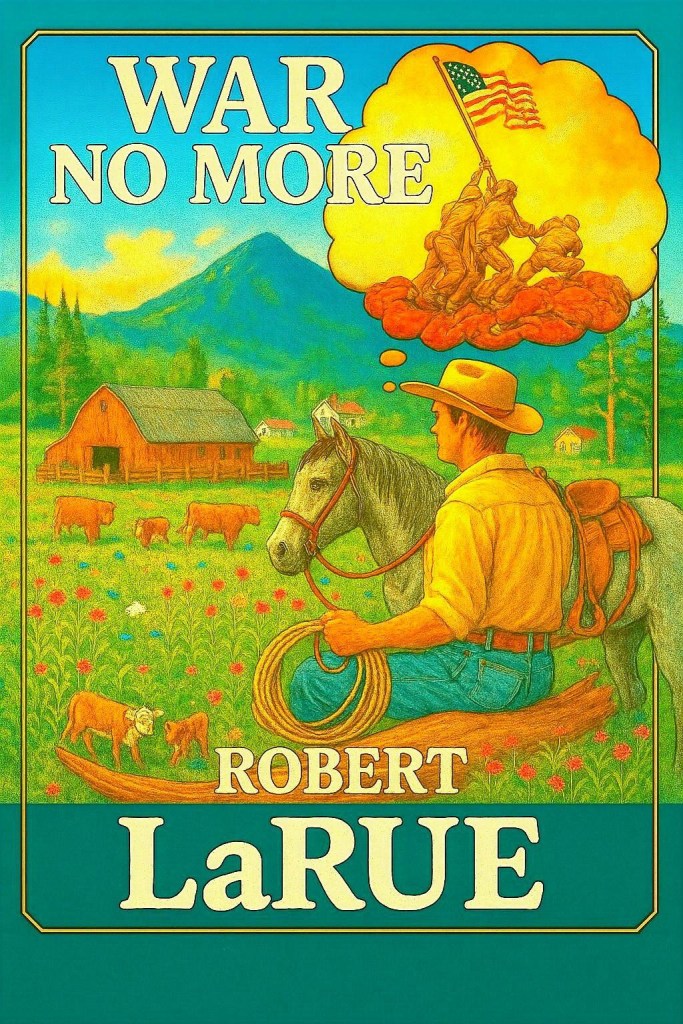
Opening Scene: Chapter 1 finds PFC Paul Harper far from home on the island of Guadalcanal in the South Pacific during World War II. Discover how he survives the perils of war and finds new life on a cattle ranch in the mountains of North Idaho.
Available on Amazon Kindle Unlimited for free, $3.99 to buy, or as a paperback, $14.99.
Paul Harper hunkered down in a shallow foxhole —his first taste of combat. The rest of his squad strung out in similar hastily dug foxholes to his left and to his right. He swatted at clouds of insects trying to eat him. He listened to sporadic gunfire raining down from the ridge above and kicking up small showers of dirt. While clinging close to the ground, he prayed silently, “Please don’t let one of those bullets find me.” He listened to the whine of mortar rounds flying overhead and exploding on the hill in front of him. The sound of screams as artillery found its mark sent shivers up his spine.
The death and destruction around him were not exactly what he had in mind when he signed up and swore to defend God and Country. This was not the larger-than-life hero’s role of protecting his country from a vicious yellow peril he had envisioned. Like thousands of fellow patriotic young men, Paul had peeled that role off a cinematic screen in two-dimensional images of black and white film. What he saw now included all three dimensions and came through in vivid living color. He was stuck on a small spit of land in the middle of the Pacific Ocean, risking life and limb to defend a ragged little airfield some fools had planted there. He could not see how this had anything to do with defending God and country. He was clear on the other side of the world.
Out of fear and confusion, Paul found an epiphany that day. Times were tough growing up during the Great Depression. His father struggled hard to keep food on the table. Like many of his neighbors in Otis Orchards, Washington, Sam Harper supplemented what the family grew in the garden and what he could afford at the grocery store with the meat of wild game from the surrounding mountains and countryside.
However, unlike the hunter-gatherers from generations past, he had to contend with game laws and hunting seasons. The age-old contest between prey and predator now held a new element. The prey now had the game warden and a network of spies and snitches to aid it in the age-old equation. Paul learned early on from his father not only how to stalk and kill wild game, but also how to do it without being seen. This was his epiphany. He had to figure out how to apply those same principles to his present predicament. He knew this from the bottom of his gut. The prey he now stalked could become the predator that would kill him if he failed to figure it out.
Paul peered over the lip of his foxhole. In front of him was an open area, cleared to expose anyone attempting to advance up the hill. Behind him and off to both sides was more of the seemingly endless deep jungle his platoon had been struggling through. The mortar rounds flying overhead and the rifle fire raining down the hill told Paul that he was directly in the line of fire between two opposing forces. He knew from training exercises that it was only a matter of time before the thump-thump of the battery behind him would cease, his sergeant would wave his arm forward, and pass the command, “Move out.” His squad would advance from the cover of the jungle and race fully exposed across the clearing. At that point, survival would have nothing to do with skill or cunning. It would simply be a matter of fate and statistics. The whole operation contradicted everything he had learned while growing up. In his world, you always maintained your cover.
At that point, Paul’s mind quit reasoning. Instinct took over. He slithered over the edge of the foxhole and crawled deeper into the undergrowth. He was back home on Mount Spokane, stalking a deer or elk. He crept through the jungle and worked his way to the right side of his platoon, off to where running water formed a small cut down the hillside. He buried himself in that shallow canyon and climbed about halfway up the hill before the rest of his platoon started its advance.
Paul looked back to his left as the platoon began its charge across the clearing. First one man, then another, and then still another fell as the main force of stooped-over running men moved forward. Medics ran out of the trees and gathered the wounded and dead as the charge continued. Paul resumed his advance, swimming and crawling up the muddy canyon. He reached the summit and dropped into the cover of jungle growth.
He watched as his platoon mates struggled up the hill against a withering rat-a-tat of machine gun and pop, pop, pop of rifle fire. He could see along the ridge where Japanese soldiers formed a line, well dug in and fortified. By now, his platoon was about halfway up the hill and stalled. Confusion reigned as the platoon lieutenant moved squads from one position to the next, trying to break through the gunfire.
Between his vantage point and the enemy line, he spotted a figure hiding in the branches of a tall tree. At first, he thought it was an animal. He shifted his position a little to get a better line of sight through the dense growth of his cover. He could now see clearly that it was a man. He watched as the spotter, sniper, or whatever he was, put something to his mouth and pointed with his free hand. Instantly, the machine guns on the hill re-aimed and chattered in rapid fire. Paul then sensed his mission. The man in the tree relayed his platoon’s every move to the machine gun battery. He had to be silenced.
Paul gauged the distance between his position and the man in the tree. He knew from hunting game that it was too great to ensure a clean kill. His father’s words came back to him. Make sure you are in a position to get a good, clean kill. The last thing you want to do is track a bleeding deer across an open snow-covered field.
He smiled a bit at the irony of the comparison. The chance of snow on Guadalcanal was about the same as the chance of snow in Hell. Even so, the principle remained the same. He did not want his quarry to spot him and give away his position. He inched forward toward the man in the tree.
At about 75 yards, Paul flattened out on the ground in a patch of tall grass. He parted the blades carefully, just enough for a clear line of sight to his quarry. He eased his rifle to his shoulder and carefully aimed from the prone position. He watched as the spotter lifted his radio microphone to his mouth, then squeezed off a single round. Instantly, the radio went flying and crashed to the ground. The man stretched and shuddered for an instant, then tumbled through the branches until some combination of limbs caught him, and he just hung there. Paul beat a hasty retreat to his hiding place, knowing that the enemy would be all over the place as soon as they realized they had lost their spotter.
Without the spotter’s eyes and ears for guidance, the machine guns quickly lost their effectiveness. Paul’s platoon promptly took advantage of the situation, and soon soldiers were pouring over the crest of the hill. Rifles fired, grenades exploded, bayonets thrust, and in short order, the hill’s ownership transferred to American hands. A squad of Americans advanced toward three Japanese soldiers milling around under the tree where the dead spotter hung. It was not Paul’s squad, but he unobtrusively joined in as the Americans overwhelmed and disarmed the Japanese. One of the Americans spotted the man hanging from the tree in a Japanese uniform with his head blown partly away, said, “What in the hell is that?”
“Looks like a Jap with his head half blown off,” another soldier said.
The squad leader, a battle-hardened sergeant, looked up. “Appears to me that somebody got himself a spotter here,” he allowed. He looked around and riveted Paul with a steady gaze. “Would that be you, Private?”
“Yes, Sergeant,” Paul answered.
“What the hell were you doing here? Where’s your outfit, and why aren’t you with them?”
“Well, I saw this guy in this here tree signaling somebody when we were pinned down on the hill down yonder, and so I just snuck up on him and shot him.”
“And just who in the hell told you to do that?”
“Well, actually, nobody. I just kinda did it.”
“Okay, Private, I don’t know whether to put you on report or pin a medal on you. I’ll let your squad leader decide about that. For right now, we need to get this pile of shit bunch of gooks over there with that other bunch of bastards we captured this afternoon. Move ’em out, men.”
News travels fast. When Paul rejoined his squad, his exploits were already general knowledge. His squad leader, Sergeant Kelly, first dressed him down for getting lost from his comrades and then congratulated him on his kill. His platoon leader, ninety-day-wonder master of eloquence Lieutenant Pringle, singled him out for “exhibiting unusual personal initiative in the face of danger by taking out a strategic member of the enemy force single-handedly” in front of the whole platoon when they camped that evening. The fact that he had managed to keep himself out of the line of fire was enough for Paul. The accolades were gravy. He knew he could just as well be receiving reprimands. A favorite platitude among the troops was “There’s a right way, a wrong way, and the Army way.” Paul Harper was beginning to understand what it meant.
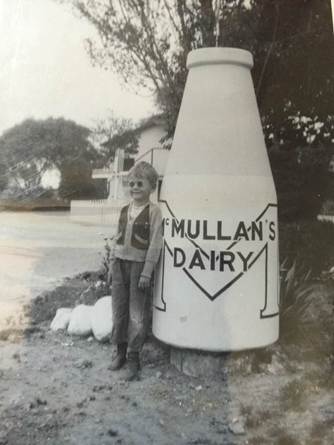
The author poses at the dairy entrance, with dark glasses as a result of a recent bout with measles.
December 7, 1941, may have been “a date which will live in infamy” for President Roosevelt, but it was the beginning of all kinds of strange and scary events for a four-year-old. The wailing sirens and darkness of blackout drills stand out in my mind.
We lived on McMullan’s Dairy in Baldwin Park, California. Baldwin Park is located only about twenty miles from downtown Los Angeles. In the days before supermarkets, it was not uncommon for dairies to be located near population centers. On-site retail marketing was a common practice. After the attack on Pearl Harbor, what had been considered a good location for dairy product retailing also came to be considered a prime target for a Japanese attack.
Before radar bomb sights, bombardiers relied on what they could see on the ground to figure out where to release their devastation. A primary means of civil defense against a night attack was the blackout. If there was no light on the ground, the attackers could not identify their targets. The sound of blackout sirens in the night became a fact of life for us.
Rationing also became a fact of life. Living on a dairy, we had plenty of milk, cheese, and butter, but meat was rationed, even for us. To supplement our diet, Dad built some hutches and raised rabbits. He shared the fryers with the dairy’s owners, a Dutch family named Kohn, in exchange for alfalfa and grain. Mrs. Kohn also helped with caring for the animals.
One dark night, I was out by the hutches helping Mrs. Kohn when the sirens wailed, and the lights went out. She had come prepared for such an event with a flashlight. She handed the flashlight to me to hold while she finished the chores. Like any kid of four, I proceeded to flash the light around and point it at the sky. Sweet, gentle Mrs. Kohn came unglued. She grabbed the offending torch from my little hands and explained to me in no uncertain terms that I could have caused us to be bombed. I suppose she was somewhat oversensitive about bombing since she still had family in Holland who had recently experienced the Blitzkrieg. But she scared the heck out of me. I quickly changed from being a carefree child piercing the night sky with a harmless flashlight to being a magnet for falling explosives.
To this day, I feel a stab of fright any time I allow a flashlight’s beam to wander above the horizon at night!
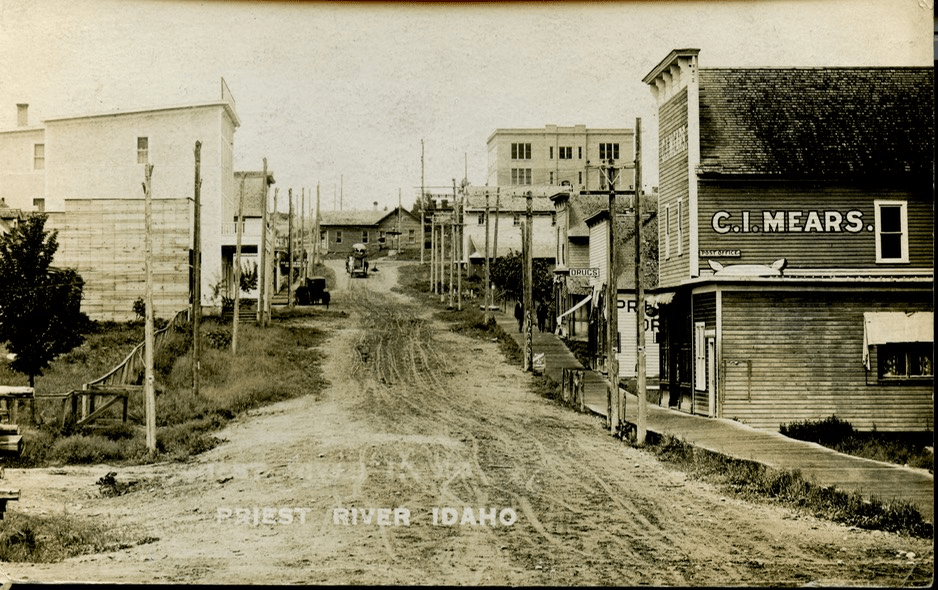
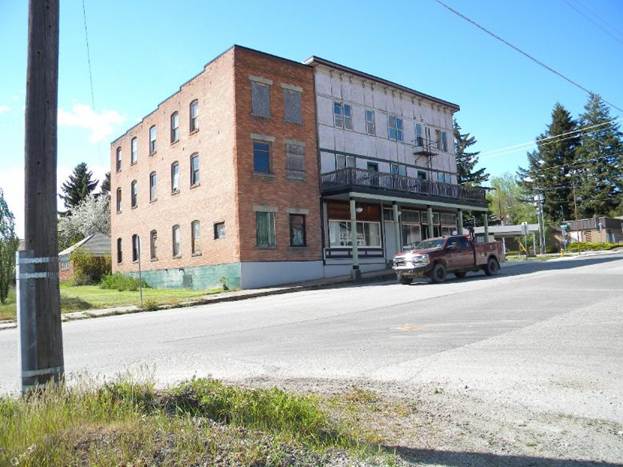
A lot of the social interaction in the novel War No More takes place in and around the Hotel Pend Oreille. The model for the hotel is the historic Hotel Charbonneau, now a National Historic Place.
The Hotel Charbonneau was originally constructed in 1912 by Charles and Dora Charbonneau (architects PJ Young and Charles Charbonneau). During the first half of the 20th century, Priest River and the Hotel Charbonneau, which is located one block away from where the train station used to be, was a popular stopping-off point for people traveling to nearby Spokane, Coeur d’Alene, Sandpoint, and Priest Lake. In 1920, Dora Charbonneau added a brick addition onto the south side of the hotel to accommodate more guests. After the brick addition was built, the Hotel Charbonneau boasted 27 guest rooms with more than half of them having their own private bathrooms; an extravagant luxury at that time.
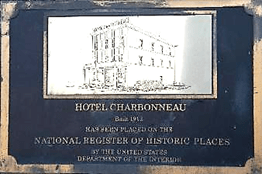
The Charbonneau operated as a hotel/boarding house until the late 1980s, when it was abandoned and risked being condemned. In 1991, the Priest River Restoration and Revitalization Committee (PRRRC), a local non-profit group composed entirely of volunteers, took control of the Hotel Charbonneau and saved it from complete deterioration. Among the PRRRC’s accomplishments was having the Hotel Charbonneau added to the National Register of Historic Places (11/19/1991), which protects the historic structure for future generations.
You can see the Hotel Charbonneau in the 1914 photo above on the left. The photo was taken before the brick addition was built. https://hotelcharbonneau.com/history.html
The following pictorial shows the hotel and surroundings as they exist today. War No More is available on Amazon https://www.amazon.com/War-No-More-Robert-LaRue-ebook/dp/B0GC9MKK7N free on Kindle Unlimited or $3.99 to buy, $14.99 for the paperback. Check it out. (Photos by the author.)
Hotel Charbonneau (Fictional Hotel Pend Oreille in War No More) as it appears today.
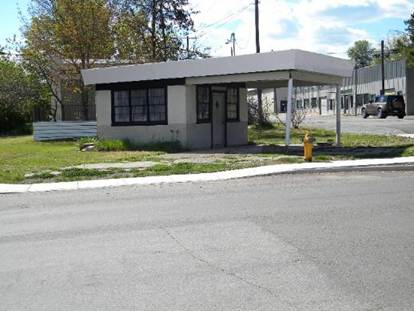
Abandoned filling station (Seaton’s Garage in the novel).
National Register of Historic Places placard at the entrance of the hotel.
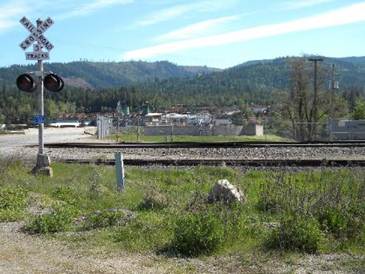
The railroad tracks still run by, but the depot is long gone.
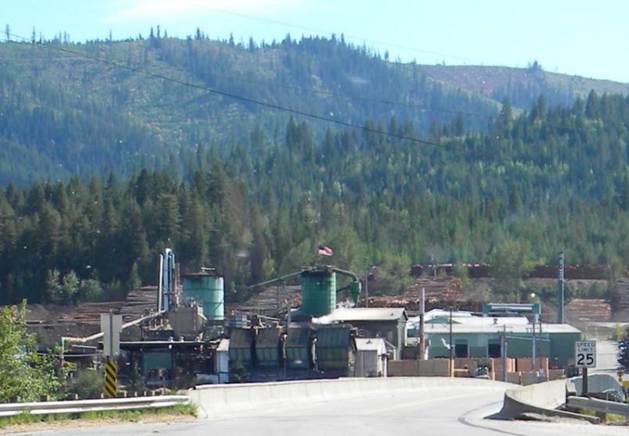
But they still saw logs at the mill across the river.
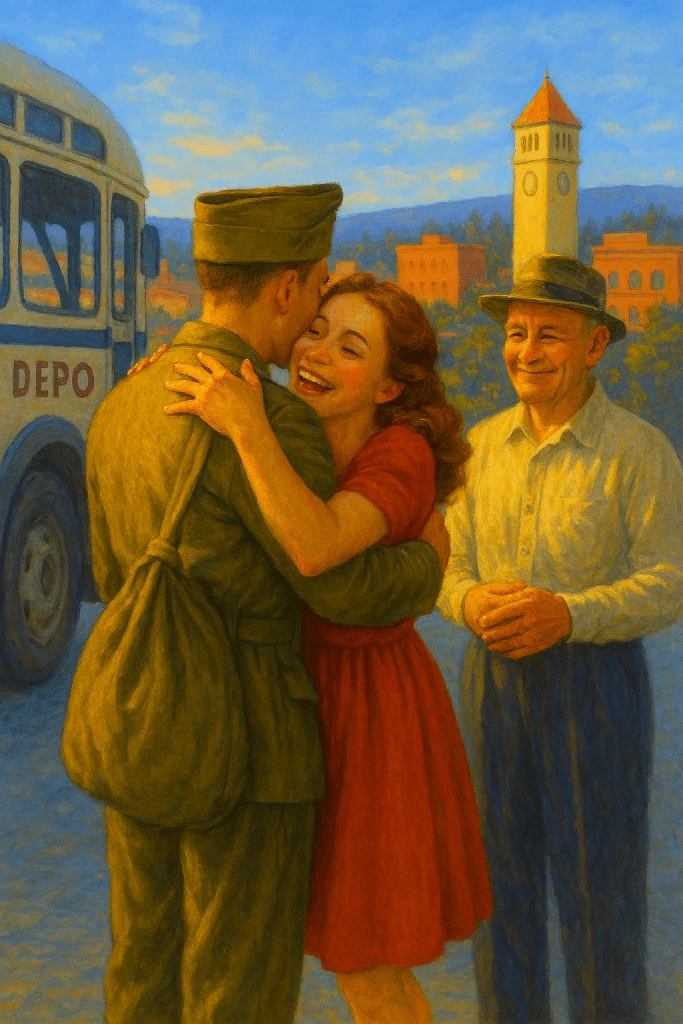
Paul watched through the windshield as the bus descended Sunset Hill and the buildings of Spokane came into view. Late afternoon summer solstice sunshine bathed the scene. They pulled into the depot, and he stepped down into the arms of his waiting sister. The two hugged unashamedly, something they had not done since they were children. Paul spotted his father over his sister’s shoulder. The two men shook hands around the clinging girl. “You’re looking mighty fine there, soldier,” Sam Harper beamed with uncommon emotion.
“Thanks, Dad. You’re looking pretty fit yourself. Here, here, Sis, easy does it. People will talk,” Paul said with a grin as he pried Barbara Harper’s arms from around his neck.
“I don’t care if they do. I’m just happy you’re home alive and safe.” Barbara gave him a big kiss, leaving red lipstick marks on his cheek as she reluctantly let go.
Paul gathered his gear from the baggage handler and shouldered his duffel bag. Sam grabbed Paul’s ditty bag and led the way across the parking lot to a shiny new Ford sedan parked off by itself. He opened the trunk and set the ditty bag on one side. Paul dumped his duffel bag next to it. “Nice car, Dad,” he exclaimed.
“Yeah, it’s brand new. We just got it about a month ago. Willie put us on the waiting list a while back, and our name finally bubbled up to the top, I guess. It drives real nice. I parked it away from the other cars so it won’t get dented. She’s been a long time coming. Here, you give her a test drive, see what you think.” Sam proffered a key ring to his son.
Paul pushed the hand holding the keys aside. “Nah, you drive. I haven’t had much practice lately. Wouldn’t want to wreck your new ride.”
Sam pressed the keys into Paul’s extended hand and used his other hand to close it around them. He held his son’s fist in both his work-hardened hands and looked straight into his eyes. “Welcome home, Son,” he said evenly. He broke the spell with a warm Sam Harper smile and released the hand. “Now this is your Old Man speaking, and if I say you drive, war hero or not, you’ll by God drive. Now get in there and take us home before your Ma has a conniption fit from waiting.”
“Okay, okay,” Paul relented. He opened the driver’s door and crawled behind the steering wheel. His sister took the back seat, and his father took the passenger side. After a moment of orientation, Paul inserted the key and stepped on the starter. The V-Eight engine roared to life, idled back, and purred contentedly. He stepped on the clutch, shifted into low, and eased out of the parking lot.
Neither Paul nor his passengers were surprised at how he threaded through downtown traffic onto Trent Avenue. Shortly after passing Millwood, his father waved his arm out the window at the large industrial complex that had grown up on the south side of the highway. “There she is, the old salt mine,” he announced. “It was just getting started when you left for the war. Look at her now.”
“Mom wrote and said that you’d went to work at Trentwood. I didn’t know what she meant by that. I never knew there was anything around Trentwood worth working for. What’s that all about?” Paul asked.
“Well, it’s kind of a long story, but here’s the shorter version. You remember that when you left in ‘42, I was still working on the Grand Coulee Dam. Only problem was that the project was finishing up, and work was getting pretty scarce. About that time, the government decided to build an aluminum plant over where you see it now. I hired on and worked construction there all the time the plant was going up. Then, when it went into operation, I got on with Alcoa and have been working there ever since. It’s been real nice working close to home and not having to chase construction jobs from here to hell and gone,” Sam explained.
“Yeah, but I hear that they’re going to shut the whole thing down now that the war is over,” Barbara added from the back seat.
“That’s the rumor. But there’s a new rumor going around the plant these days. It seems that Henry Kaiser might be about to take over and keep it running. If that happens, I should be able to stay on. I had a good enough record with old Henry J over at the Grand Coulee,” Sam continued.
“Yes, but Dad, what are they going to do with all of that aluminum with no war going on?” Barbara asked.
“That I don’t know. But I’ll tell you for sure, if there’s anybody around who can figure it out, it’d sure as hell be Henry J. Everything that man touches turns to gold,” Sam concluded.
They had reached the side road that led to the Harper place in Otis Orchards. Paul slowed and swung the car off the pavement onto the country lane he had known since childhood. The sound of gravel crunching under the car’s tires awakened a forgotten memory. Afternoon sunshine glistened off fresh leaves in trees lining the lane. Green grass filled the ditches alongside the road. Cattle, sheep, and horses grazed contentedly in pastures lush with spring growth. A farmer waved from the seat of a mowing machine drawn by a team of thick-bodied draft horses. The smell of new-mown hay filled the air. A brown Jersey cow stood mooing at a barn door, waiting for her afternoon milking. Paul felt an eerie sense of de ja vu. The sights, smells, and sounds surrounding him were just as he had left them four years and an eternity of experiences before. Nothing had changed. He was home at last.
Sam and Barbara remained silent as they watched Paul drink it all in. An almost magic spell hung over the shiny new Ford as it turned into the lane leading up to the Harper family home. Two-spotted Pointers rushed toward the car, their undocked tails wagging high in the air. Martha Harper stood at the bottom of the steps leading into the house. She clutched the railing tightly, resisting the urge to follow the dogs. As soon as the car stopped, she wrenched the car door open and gathered her son hungrily in her arms. She was crying, laughing, and smothering him with kisses all at the same time. Paul did not resist but hugged her tightly in return. He was home, safe at last.
Martha regained her composure and backed out of the car. She wiped her eyes with the corner of her apron as she dragged Paul from the car with her other hand. “Come on, stand up. Let me get a good look at you,” she urged.
Paul crawled out from under the steering wheel and stood. “My, how handsome you are in your uniform. Stay right there. I’m going to get a picture,” Martha turned and ran up the stairs into the house.
“She better make it quick, because this uniform is coming off for good in about two minutes,” Paul kneeled and roughed the hair of the bouncing dogs.
Martha reappeared, Kodak Brownie camera in hand. She snapped a picture of Paul standing next to the new car, then one of Paul with his dad and his sister. She handed the camera to Barbara, who dutifully took pictures of Paul with his mother and Paul with both parents.
With the picture-taking complete, Sam opened the car trunk, and the two men retrieved Paul’s gear. Martha led the way into the house. The aroma of frying chicken greeted Paul as he dumped his duffel bag in the foyer and roamed back into his favorite room—the kitchen. “Of all the things I’ve missed, I reckon this is what I’ve missed the most,” he announced.
“What’s that?” his mother questioned from the doorway.
“This,” he said as he lifted the lid from the frying pan warming on the stove. He grabbed a drumstick and took a big bite. “Um, um good,” he closed his eyes and sighed.
Sam walked across the room to a sparkling white refrigerator standing where the old brown icebox had stood when Paul left home. “How about a beer?” he asked as he opened the door.
“Sounds good to me,” Paul responded, followed by Martha’s “Me too, please,” and Barbara’s “Me three, let’s celebrate.”
Sam pulled four Olympia stubby bottles from the refrigerator and placed them on the counter. He lifted an opener from its nail above the counter and pried the cap from each bottle. He handed the bottles around and lifted his own. “Here’s to family,” he announced. They all clinked their bottles, took a sip, and sat at the kitchen table.
Sam pulled a pack of Camels out of his shirt pocket and lit up. Paul followed suit with Lucky Strikes. Barbara reached over, snatched the cigarette pack out of Paul’s hand, extracted a cigarette, and held it up between two fingers. Paul obediently lit it for her. Martha frowned at her daughter’s smoking but said nothing.
Paul took a long pull from his beer. “Um, boy, that’s good and cold. You got a new refrigerator there, I see. New car, new refrigerator; what else is new around here?”
“Not a whole lot. You couldn’t buy much of anything, even if you had the money during the war. If it wasn’t rationed, it just wasn’t available. Even now, you have to get on a list for just about anything you want. Your Mama’s got a new electric stove coming any day now. The only thing is, it ain’t going to do her much good unless we can get an electrician out here to put in the wiring for it. They say it takes two-twenty to run a stove, and we only got one-ten. Problem is that everybody and his brother wants to do the same thing at the same time. The electric shops don’t have enough people to keep up, and can’t get enough parts to do the job, even if they have the people. It’s a hell of a mess, but I reckon it’ll all even out when we all run out of war money. Then maybe we can get back to normal like the good old days when the Depression was on, and nobody had any money,” Sam stated with a hollow laugh.
“Well, anyway, things look a lot more prosperous around here than I remember. The job over at Trentwood must be treating you pretty good,” Paul observed.
“It’s hard and dirty work, but it’s steady, and the pay is good. The money was good enough on the Grand Coulee Dam, but it was tough living over there in a cockroach-infested barracks and only getting home weekends if at all. It’s nice working close to home. That’s why I hope Kaiser can come in and keep things going,” Sam replied.
“How about you, Sis, what are you up to these days?” Paul asked.
“Oh, I finally got through business school, and Uncle Johnny put me to work in his office. It’s kind of boring posting journals and ledgers all day long, but it sure beats my old job waiting tables down at the diner. At least I don’t have to put up with a bunch of idiots telling dumb jokes and trying to play grab ass all the time,” Barbara answered. “How about you? What are your plans, Brother? I hear you guys can go back to school on the GI Bill if you want to. Are you thinking of something like that?”
“Hell, I don’t know. Right now, I just want to shed this monkey suit and get into some decent clothes. I do know that I’ve seen all the Army green I want to see for the rest of my life,” Paul said with a grin.
“Your room is all set just as you left it, only neater. Your clothes are in the closet and the dresser just like always. I hope everything still fits you,” Martha volunteered.
“It should. I gained weight going through boot camp before we went overseas. After that, though, real meals got to be kind of few and far between. Then there’s this damned malaria bug I keep fighting. I think I’m probably skinnier now than I was when I left,” Paul answered.
“We’ll work on fattening you up now that you’re home. Dinner will be ready whenever you are. By the way, Willie called earlier and wanted you to give him a call,” his mother responded.
“Okay, I’ll call him later. Funny thing, I met a guy on the bus coming over the hill today who knows Willie. The guy works down at Paulsen’s Photography,” Paul said as he rose to leave the room.
“That’s not surprising. Willie’s quite the popular man about town these days. Everybody knows Willie Womack,” Martha called out as Paul disappeared down the hall.
***
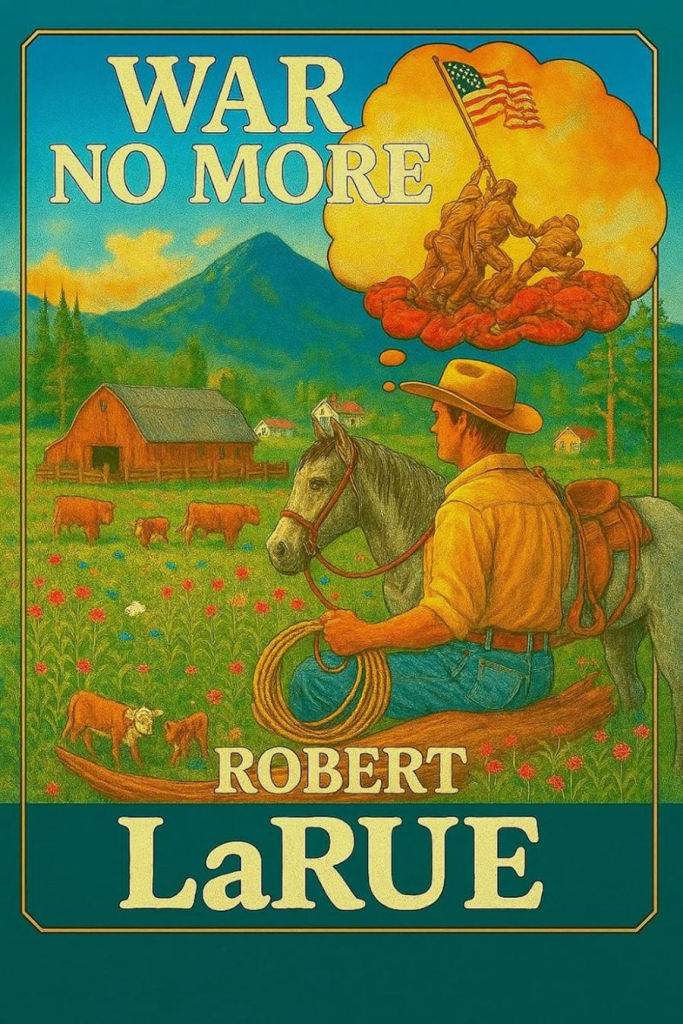
War No More is now available on Amazon: Free on Kindle Unlimited, $3.99 for the ebook, or $14.99 for the paperback. Click here to read a sample or order. https://a.co/d/0cZoVaS3
December 7, 1941, may have been “A date which will live in infamy” for President Roosevelt, but for me, a four-year-old, it symbolized the beginning of all kinds of strange and scary events. The wailing sirens and darkness of blackout drills stand out in my mind.
We lived on a dairy in Baldwin Park, California. Baldwin Park is located only about twenty miles from downtown Los Angeles. In the days before supermarkets, it was not uncommon for dairies to be located near population centers. On-site retail marketing was a common practice. After the attack on Pearl Harbor, what had been considered a good location for dairy product retailing also came to be considered a prime target for a Japanese attack.
Before radar bomb sights, bombardiers relied on what they could see on the ground to figure out where to release their devastation. A primary means of civil defense against a night attack was the blackout. If there was no light on the ground, the attackers could not identify their targets. The sound of blackout sirens in the night became a fact of life for us.
Rationing also became a fact of life. Living on a dairy, we had plenty of milk, cheese, and butter, but meat was rationed even for us. To supplement our diet, Dad built some hutches and raised rabbits. He shared the fryers with the dairy’s owners, a Dutch family named Kohn, in exchange for alfalfa and grain. Mrs. Kohn also helped with caring for the animals.
One dark night, I was out by the hutches helping Mrs. Kohn when the sirens wailed, and the lights went out. She had come prepared for such an event with a flashlight. She handed me the flashlight to hold while she finished the chores. Like any kid of four, I proceeded to flash the light around and point it at the sky. Sweet, gentle Mrs. Kohn came unglued. She grabbed the offending torch from my little hands and explained to me in no uncertain terms that I could have caused us to be bombed. I suppose she was somewhat oversensitive about bombing since she still had family in Holland who had recently experienced the Blitzkrieg. But she scared the heck out of me. I quickly switched from being a carefree child piercing the night sky with a harmless flashlight to being a magnet for falling explosives.
To this day, I feel a stab of fright any time I allow a flashlight’s beam to wander above the horizon at night!